At Kilómetro 18 of Boulevard Kukulcán, between a beach club that opens at eleven and a golf course fence, there is a gravel car park with a ticket booth and a gate. Behind the gate, close to fifty low stone structures line two plazas that were a working Maya port when this sandbar was still just a sandbar. Almost everyone driving past has been told they came to a city with no history, and nobody has corrected them.
Those structures are what this guide is about: the ruins inside the Hotel Zone itself, within walking or short-bus distance of the towers, plus the one site north of the ferry terminals that almost no visitor reaches. No day trip inland, no coach at six in the morning. They are cheap, they open at eight, and at that hour you will often have them to yourself.
Begin in the gallery, then walk out into the settlement
Start at the Museo Maya de Cancún y Zona Arqueológica de San Miguelito, Km 16.5 in the southern Hotel Zone, because it is the only place that answers the question the rest of the day raises. One ticket (MX$210 for foreign visitors, MX$105 for Mexicans) covers both the air-conditioned galleries and the archaeological site behind the building, and that combination is the point. You spend forty minutes with the objects and the maps of the coastal trade route, and then a door at the back of the museum puts you on a path through San Miguelito, a residential settlement that was occupied through the last centuries before the Spanish arrived. A house platform, a small pyramid, a palm canopy, a beach club four hundred metres away on the other side of the boulevard.
It closes on Mondays, which is the single most useful fact in this article. Build the week around it, because two of the three Hotel Zone sites are worth less without the context this one supplies. There is a cloakroom, which matters if you are coming off the beach with bags, a bookshop with actual INAH publications rather than fridge magnets, and guided tours available on site rather than pre-booked. Groups are handled comfortably; the galleries absorb twenty or thirty people without anyone shuffling. Couples and solo visitors should aim for the first hour after opening or the last two hours of the afternoon, once the tour buses have moved on.
El Rey at eight in the morning
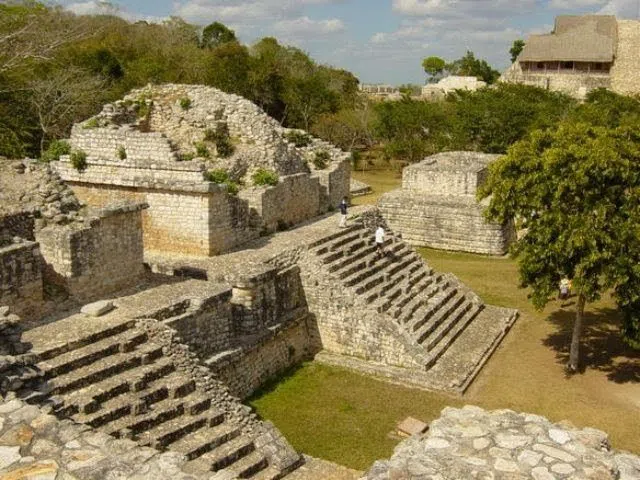
Zona Arqueológica El Rey sits at Km 18, at the southern end of the Hotel Zone where the boulevard runs between the open Caribbean and Laguna Nichupté. It is a Late Postclassic trading port: a plaza and a processional street of platforms and small temples, with the lagoon on one side and the resort strip on the other. INAH reopened it in July 2025 with new restrooms, a proper ticket booth and a parking area, and it is still mostly empty at eight in the morning.

Entry is MX$145 for foreign visitors and MX$80 for Mexicans, with free entry on Sundays for nationals and residents. There is no reservation, no timed slot and no online ticket; you walk up and pay. INAH-licensed guides wait at the gate and take small groups; agree the language and the fee before you set off, because the arrangement is between you and the guide rather than the site. An hour with one of them is the difference between a field of grey stone and a port that traded salt, obsidian and cacao up a coastal route. The iguanas are not a tourist attraction, they are simply resident, in numbers, and they will not move for you.
Groups fit easily here, because the gravel lot at Km 18 takes coaches and the paths are wide and flat. What the site has nowhere on it is shade. Go at opening, carry water, and treat eleven in the morning as the point at which this becomes an endurance exercise rather than a visit. Structures are not climbable; the walk is level ground and low steps only.
Read the coastal ridge from Playa Delfines
Five hundred metres back up the road, Playa Delfines (El Mirador) at Km 17.5 is the only stretch of the Hotel Zone with no hotel built on it, and that absence is why it belongs on this itinerary. It is free and fully public, with free parking beside the lookout, palapas, showers, restrooms and lifeguards, and no limit on how many of you turn up.
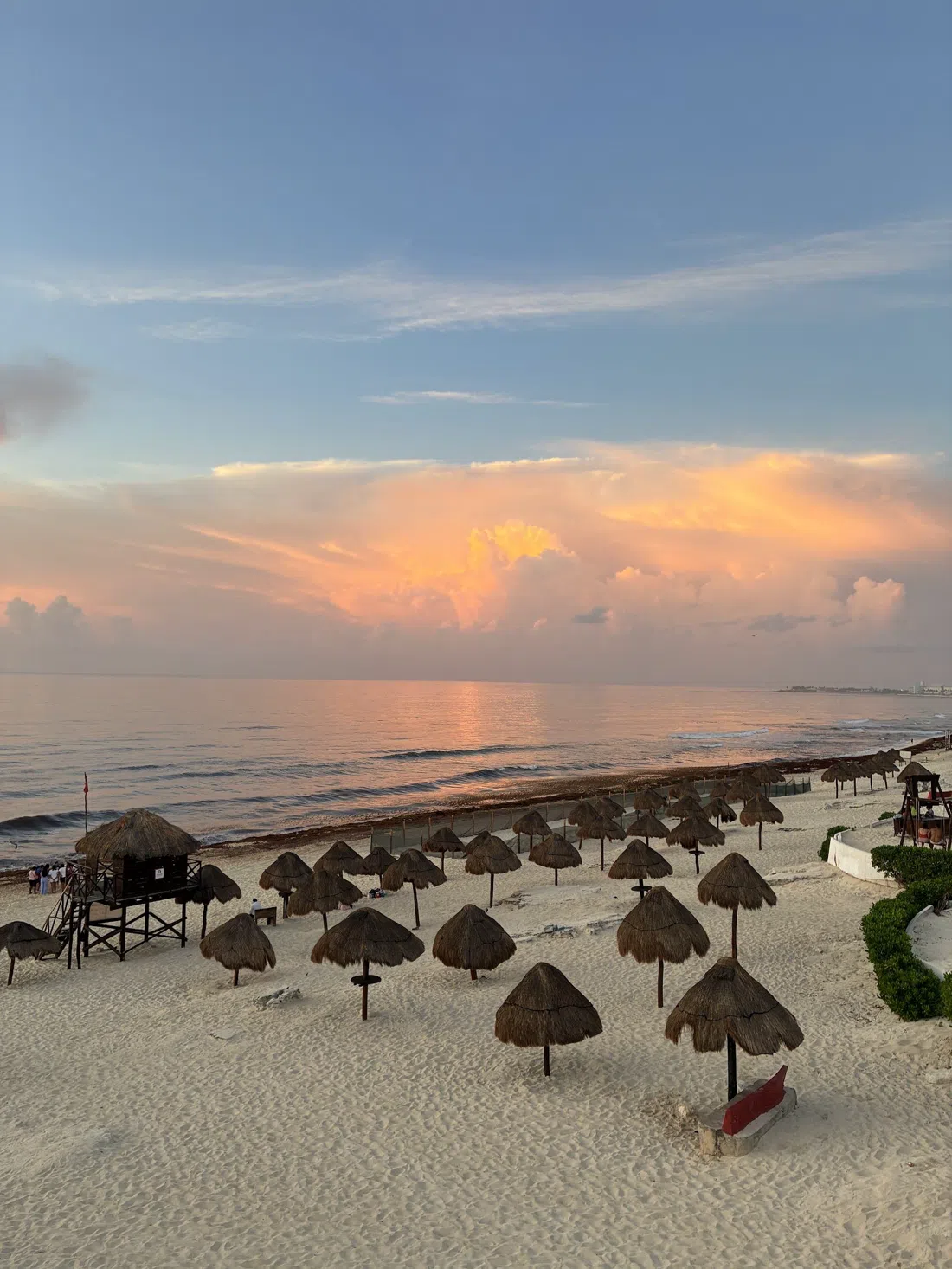
Skip the queue at the coloured lettering and walk to the lookout instead. From the platform you are standing on the same low limestone ridge the builders of El Rey chose, and you can see how it runs: a slightly raised spine along the sandbar, high enough to keep a settlement out of the water, with the lagoon system behind it. Ten seconds of looking at that does more for the day than any interpretive panel. On the swimming question, be honest with yourself. This is the open Caribbean, the shore break is strong, and the flag system is there because people misjudge it. Read the flag, not the weather.
A temple you reach along the sand
Yamil Lu'um, also called the Templo del Alacrán, is on the low hill above Playa Marlín at around Km 12.5, hemmed in by a resort on one side and a shopping centre on the other. It is a thirteenth-century coastal marker, most likely a navigation beacon for canoe traffic working this shoreline, and it makes the case better than anything else here that Cancun is built on top of something. It is also free, unfenced and completely unstaffed.
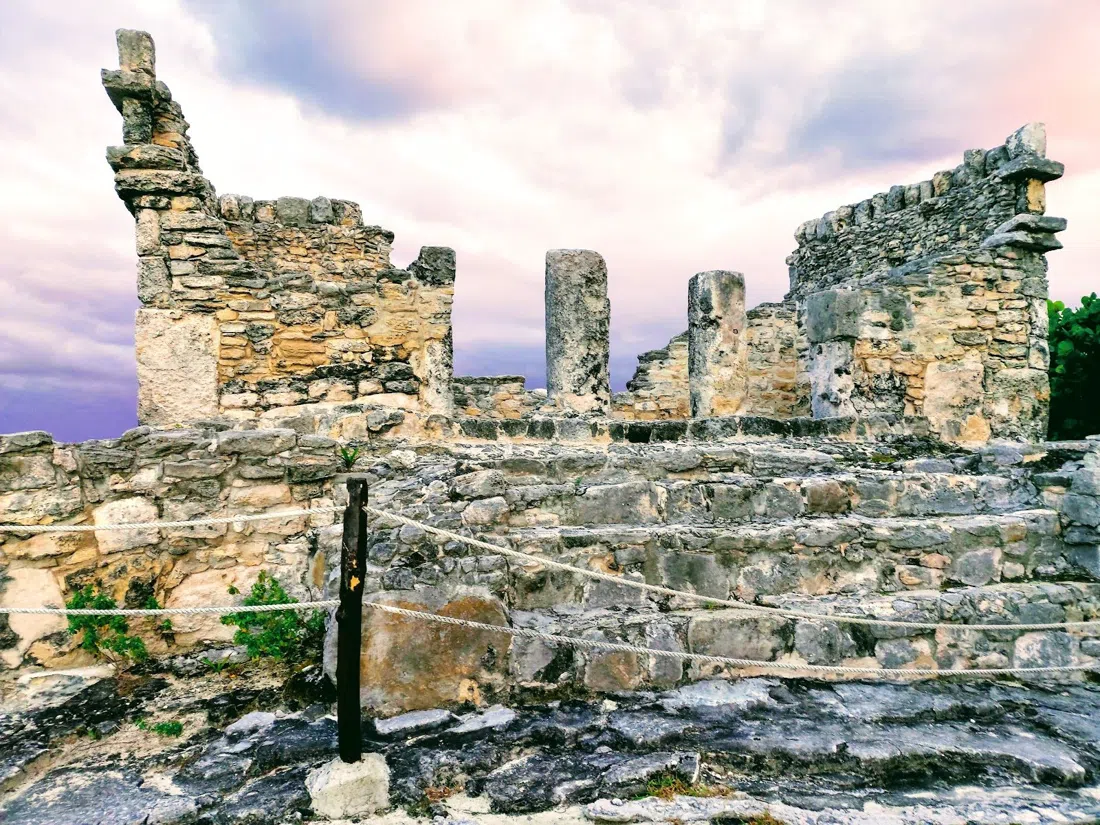
How you get to it matters. Walk the beach from the public access at Playa Marlín, four hundred to five hundred metres of sand, rather than trying to cross through hotel property, because the hotels' security policies on this change day to day and a polite refusal at a lobby door is common. Mexican beaches are public to the waterline, so the sand route is always open to you; the lobby route depends on who is on the desk. This works for two or three people and is genuinely awkward for a coach party, both on the sand and at the top, where the ground around the structure is tight.
There is no ticket booth here, no water, no restroom, no shade and no signage worth reading. Wear shoes you can climb a sandy slope in. The scorpion motif and the handprint that gave the temple its popular name weathered away long ago, so do not go hunting for them, and do not climb on the structure itself; nobody is watching, which is precisely why it is on you.
The ruins inside a golf course
Iberostar Cancún Golf Club occupies the middle of the southern Hotel Zone, and it shows you how completely the strip was laid over the settlement, because you play around the ruins. Small Maya structures sit within the course, and the routing simply goes past them. It is open to non-guests, which is the part most visitors do not realise.
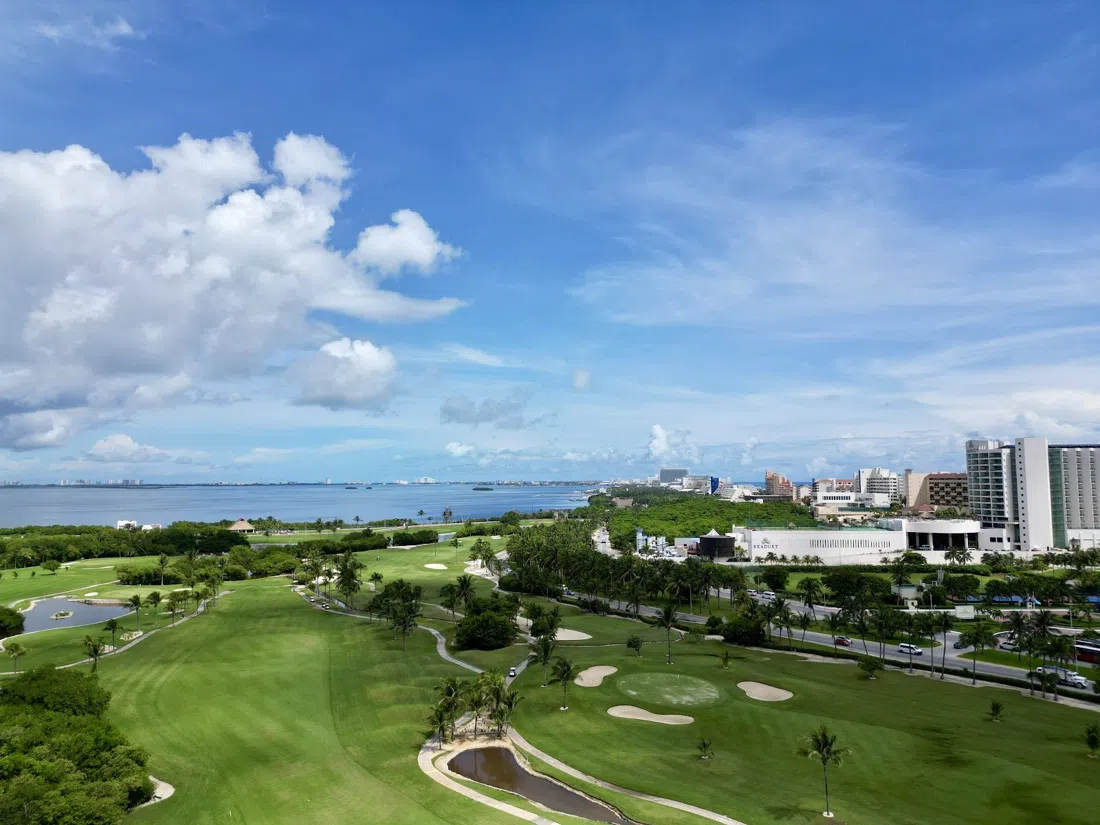
Tee times start at 06:30 in summer and 07:30 in winter at ten-minute intervals, with twilight rates from 14:00. Green fees run roughly US$99 to US$199 depending on the tee time and whether you are staying with Iberostar, and there is a free shuttle from Hotel Zone hotels for two or more players. Foursomes and society groups are bookable, so this is the one item here that suits an organised party better than a couple.
This is a golf green fee, not a site ticket. If you do not play, there is no version of it that is worth the money, and no walk-in archaeological access. There is also a loss to record. The older Pok-Ta-Pok course, which had two Maya structures of its own, closed in 2023, and those ruins now sit on private land that is shut to the public. When people say Cancun does not look after this material, that is the example they have in mind.
The third zone, past the ferry terminals
Zona Arqueológica El Meco lies north of the centre on the Puerto Juárez road, twenty to twenty-five minutes by taxi from the Hotel Zone, and it is Cancun's third archaeological zone in a city most people believe has none. INAH reopened it in January 2025 with a new kiosk, bookshop and pedestrian overpass, and it remains almost tourist-free. It is entirely normal to be the only visitor there on a weekday morning.
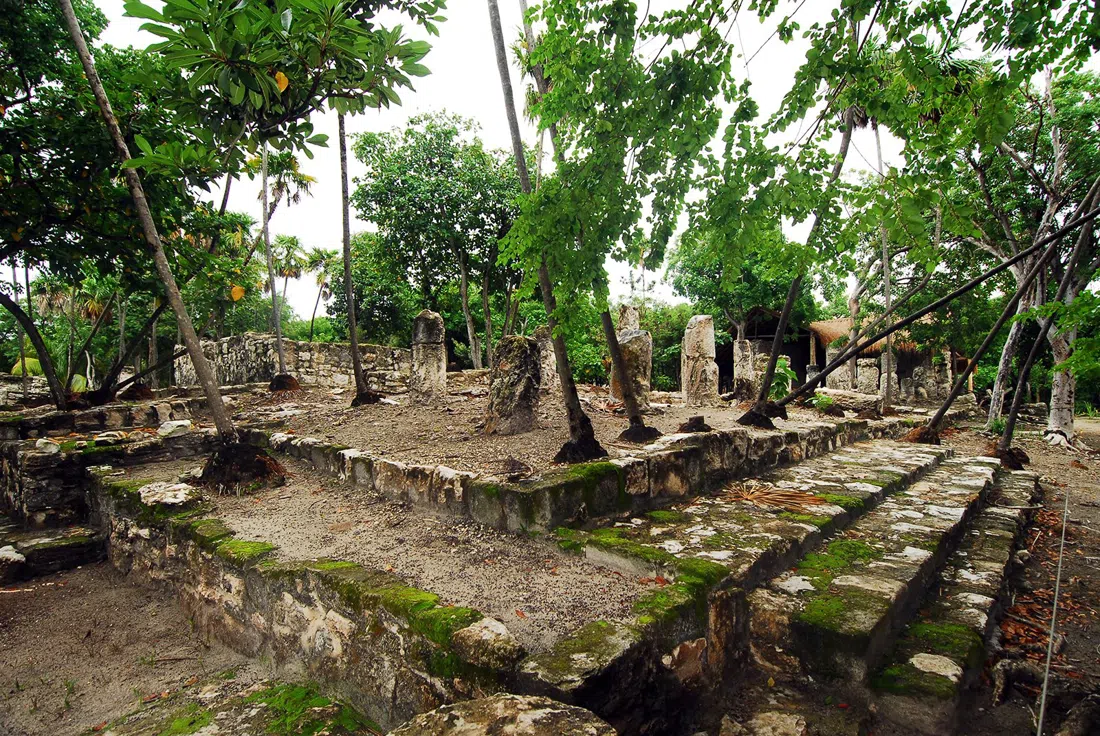
Entry is roughly MX$75 to MX$100 and the ticket window is cash only, so bring small peso notes; there is no card reader to fall back on. The main pyramid, El Castillo, is the most genuinely climbable-looking structure in Cancun, with a steep stair and serpent heads at the base. Looking is the operative word, since climbing is not permitted. The site is compact and easy for groups of up to about twenty, and the whole visit is forty minutes unless you are photographing seriously.
If you only have one morning and you want the version of this story with nobody else in it, this is the site to choose over El Rey. If you want the version that connects to the boulevard you are staying on, choose El Rey.
Where the trade route went
The Hotel Zone ports were staging posts on a coastal and inland network, and 2026 is an unusually good year to see the rest of it, because INAH has been reopening sites across Quintana Roo.
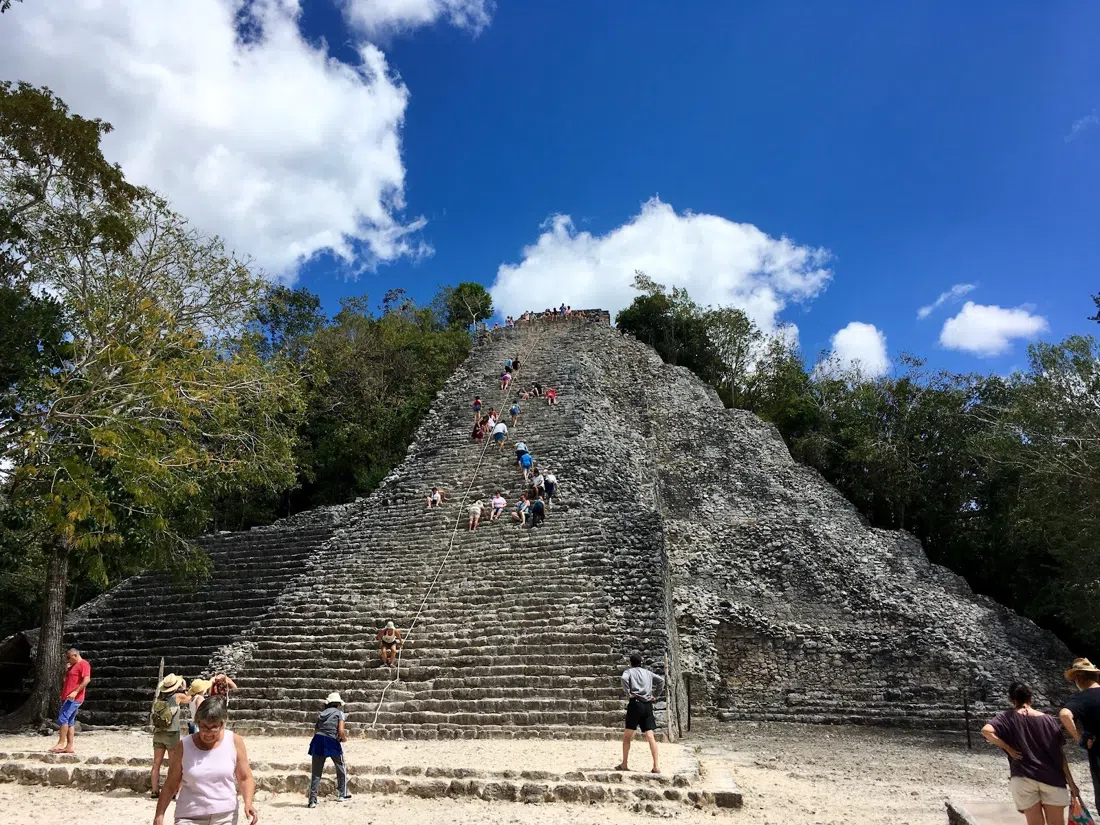
Zona Arqueológica de Cobá, about two hours inland by road, is the biggest single change on the day-trip map. Its tall pyramid has been climbable again since 8 December 2025 after five years shut, in batches of fourteen or fifteen people with a fifteen-minute limit at the top and closed-toe grippy shoes required at the rope. The site opens 08:00 to 17:00 with last entry at 16:00, climbing runs 08:00 to 15:30, and the cost is about MX$210 in INAH fees plus a MX$120 ejido community fee for foreign visitors, cash in pesos only. It is large and hot, so hire bikes or one of the tricycle drivers, especially for a group, and its sacbé causeways are the inland half of the trade system the coastal ports worked.
Zona Arqueológica de Muyil, on the road south along the coast, reopened on 11 February 2026 after nearly two years of restoration, with new paths, new signage and a small parking area that is comfortable for groups up to about twenty-five. Entry is MX$145 for foreign visitors, MX$80 for Mexicans and residents. It is still quiet, and the lagoon canals behind the site show the inland waterway system that fed ports like El Rey. For a 2026 visitor this is the freshest thing on the list.
Zona Arqueológica de Xel-Há, further down the same highway and directly opposite the water park that shares its name, reopened on 6 July 2026, the last of eleven Quintana Roo sites to come back under INAH's Promeza restoration programme. It opens daily 08:00 to 17:00, costs MX$210 for adults with fifty per cent off for Mexicans and residents and free Sundays for nationals and residents, and it has two new interpretation spaces on site. Coach access is straightforward. It was a working Maya harbour town, which is exactly what the Hotel Zone once was, and seeing it intact reframes the platforms at Km 18.
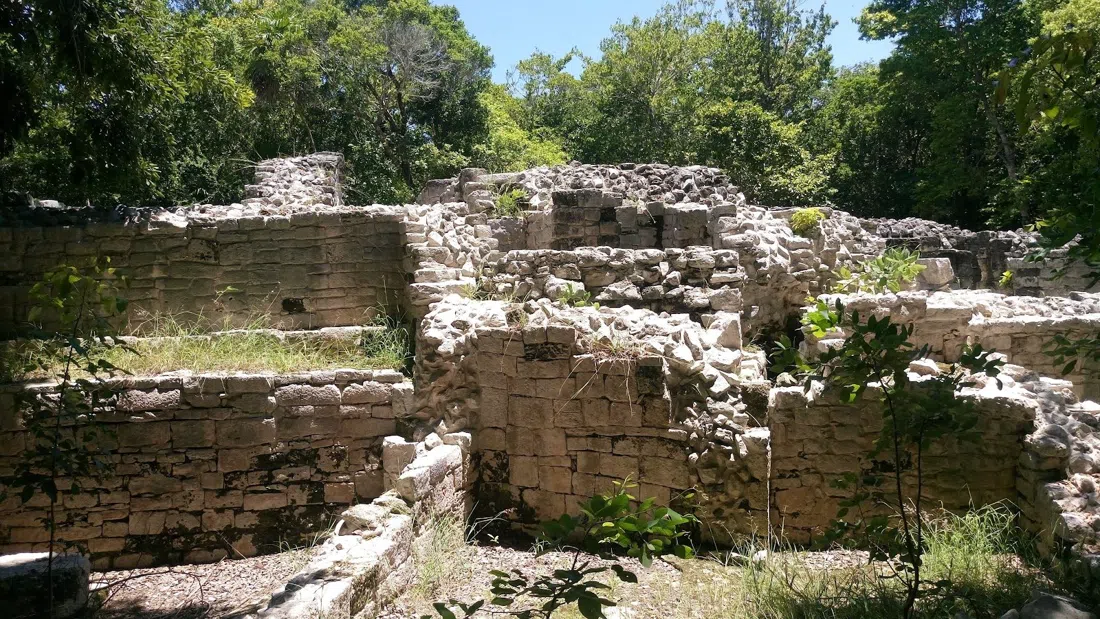
Ek' Balam, inland to the north-west, holds the best-preserved stucco sculpture within reach of Cancun, and the climb to it is still permitted. A recently opened western patio has added ground to cover. Parking is modest but it handles groups of twenty to thirty, and entry runs roughly MX$500 to MX$700 for foreign adults once INAH and Yucatán state fees are combined. It is markedly quieter than the famous alternative.
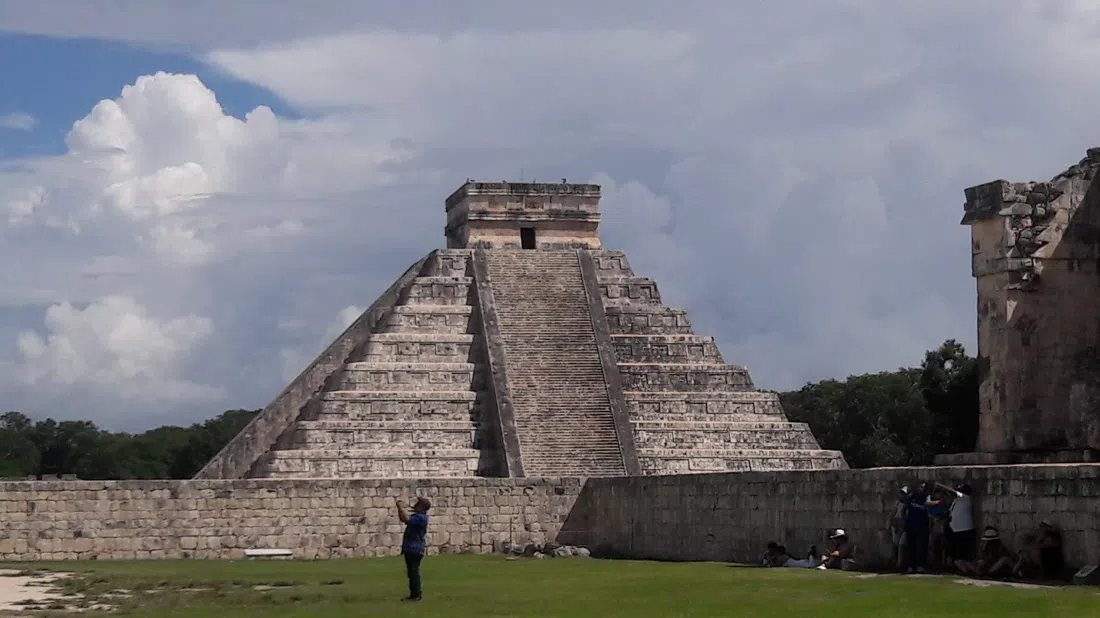
Chichén Itzá is that alternative, two and a half hours inland and the benchmark against which every stone in Cancun gets measured. One combined ticket of about MX$697 for foreign adults covers the INAH and Yucatán state fees, and it opens at 08:00. Every operator in the Hotel Zone runs coaches; the Tren Maya now serves it, which is the civilised way in. Go at opening or do not go at all, because by eleven the plaza is a market and a crowd. Then keep the comparison in your head on the way home, because the civilisation that built that observatory also built the platform two hundred metres from your resort's towel hut.
Transport, cash and timing
The Hotel Zone runs along one boulevard, so orientation is easy. The R1 and R2 buses run the length of Kukulcán between the Hotel Zone and downtown, all day and late into the night; pay the driver in cash, and flag the bus rather than waiting for a marked stop. The museum at Km 16.5, Playa Delfines at Km 17.5 and El Rey at Km 18 sit within two kilometres of each other, walkable in twenty-five minutes end to end, but in full sun, on a boulevard with patchy pavement, so most people ride one leg. Taxis are unmetered and worked on zone rates; agree the fare before you get in, and ask your hotel desk for the current rate card.
Carry pesos. El Meco's window is cash only, Cobá is cash only, and card readers fail often enough at busy sites that cash is the default rather than the backup. Small notes are more useful than large ones.
On timing, every INAH site here opens at 08:00 and that first hour is worth more than the rest of the day combined, for heat and for emptiness alike. Mondays close the museum and San Miguelito. Sundays bring free entry for Mexican nationals and residents, which is right and proper and also means busier sites. Between June and October, plan for an afternoon storm and do the stone in the morning.
Budget for the Cancun-only version. Museum and San Miguelito MX$210, El Rey MX$145, El Meco around MX$100, Yamil Lu'um and Playa Delfines free. That is roughly MX$450 to MX$500 in entry fees, comfortably under MX$1,000 including buses, one taxi to El Meco and water. A guide at El Rey is extra and worth it. Two sensible shapes for a trip: a single morning that covers the museum, El Rey and Playa Delfines on foot, with Yamil Lu'um on a separate beach afternoon; or that morning plus one long inland day at a reopened site.
For where to base yourself, the southern Hotel Zone between Km 16 and Km 18 puts all of this within walking distance, so start with a Cancun hotel search and check the kilometre marker before the star rating. For the rest of the city beyond the ruins, including downtown and the beaches, see the wider Cancun guide.