The road inland out of Cancun runs flat and scrubby for about half an hour, and then somebody stops the car at what looks like a gap in the trees. Below the gap is a hole in the limestone holding water clear enough to count the tree roots hanging into it, and cold enough at eight in the morning to make you swear out loud. By eleven there is a coach in the car park and a wait for the ladder, which is the entire argument for setting an alarm on a beach holiday.
What the peninsula is actually made of
This corner of Mexico has almost no rivers. Rain falls, turns mildly acidic as it picks up carbon dioxide from the soil, and sinks straight through a shelf of porous limestone that was seabed long before it was jungle. Over a few million years that water dissolved rooms and corridors underground; where a cave roof gave way, the shaft filled and became a cenote, from dzonot, the Maya word for well.
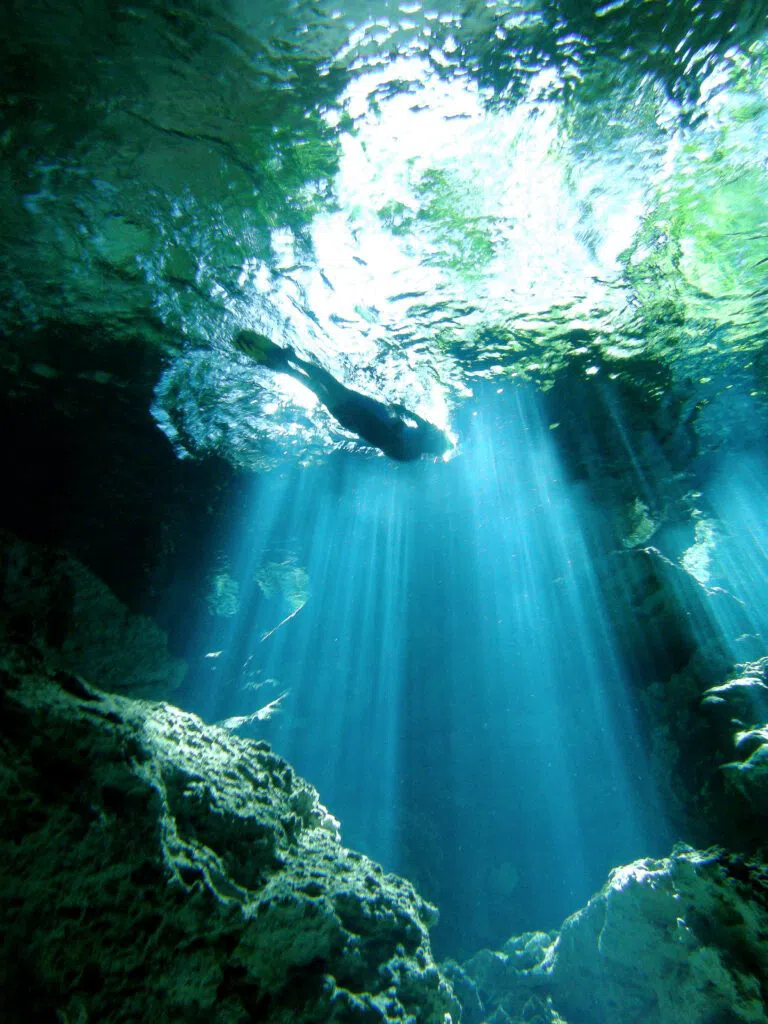
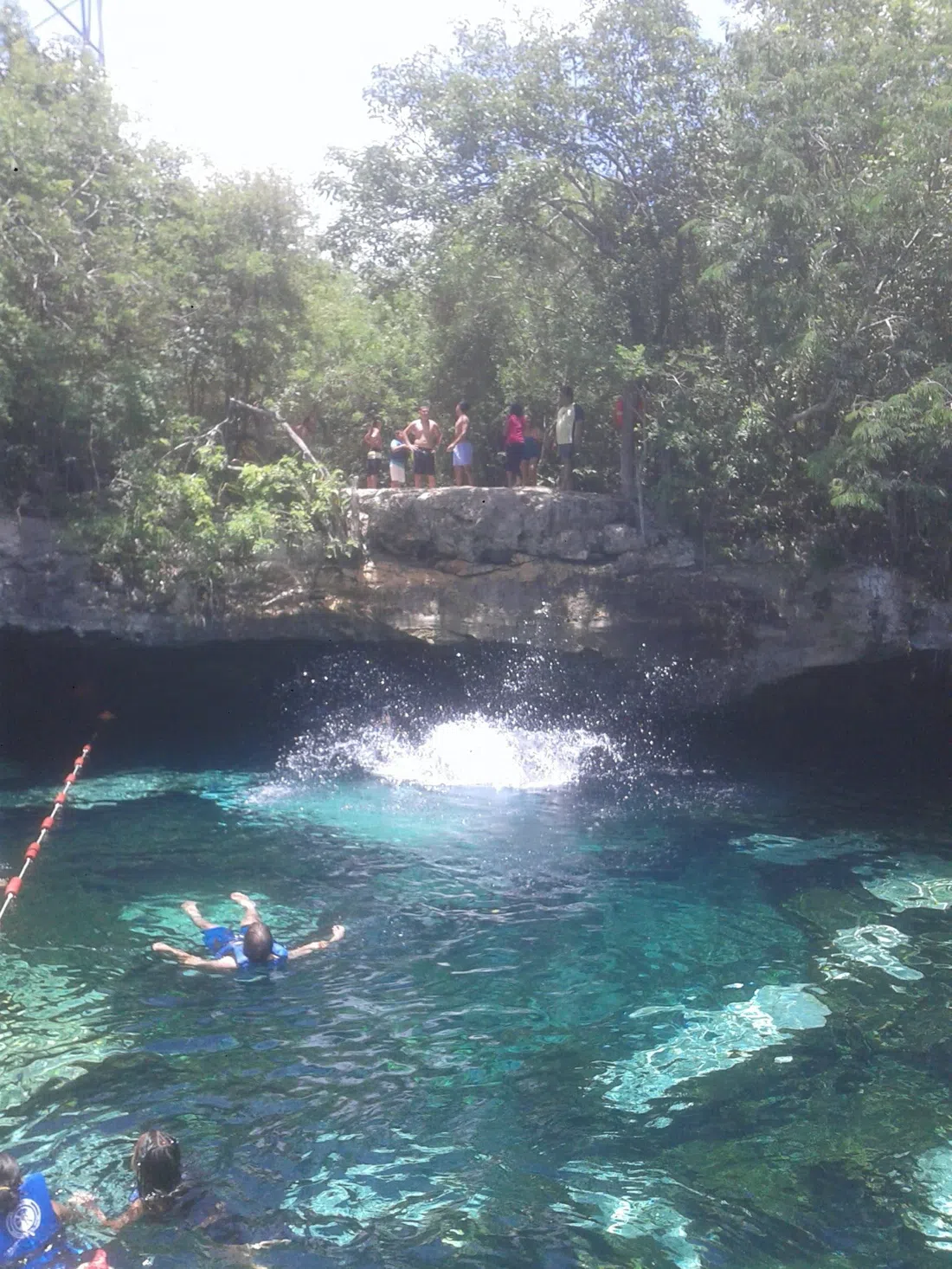
They come in four broad forms, and it helps to know which one your ticket buys: the open pool with sky over it, the semi-open one with a half-collapsed roof, the cavern you swim into under rock, and the old fully roofed chamber reached by stairs. The water is groundwater rather than river water, which is why it sits at roughly 24–25°C all year and why it is so clear: nothing stirs silt into it. Near the coast, a lens of fresh rainwater floats on heavier seawater that has pushed inland through the rock, and at one stop on this route you can see that boundary through a mask.
That geology sets the rules you meet at the gate: rinse showers before entry, no sunscreen, no insect repellent, often no shoes on the deck. A cenote is not a pool with a drain. It is the open top of the aquifer the region drinks from, and whatever goes in stays in the system.
Why the first hour is the only quiet one
Most cenote operations open between 08:00 and 10:00. Most organised trips leave the hotel strip between 08:00 and 09:00, stop for a briefing and a buffet, and reach the water somewhere between 10:30 and 11:30. That gap is the whole ritual. In the water at opening, you get thirty to ninety minutes of a place that looks like the photographs; then you climb out while everyone else is still buckling life jackets.
The rule has one exception worth planning for. Two of the most photogenic cenotes here depend on a beam of high sun dropping through a hole in the roof, and high sun is exactly when the coaches are parked. At those two you are choosing between an empty cave and a lit one. Everywhere else, go early. There is more context on the city's rhythms in the Cancun guide, but the short version is that the coast wakes late and the limestone does not.
The Ruta de los Cenotes, the closest water to your hotel
Turn off Highway 307 roughly 35 km south of Cancun, 30 to 40 minutes without traffic, and a two-lane road runs inland past kilometre markers and hand-painted signs. This is the nearest cluster to the hotel zone and the one you can do and still be back for a late lunch.
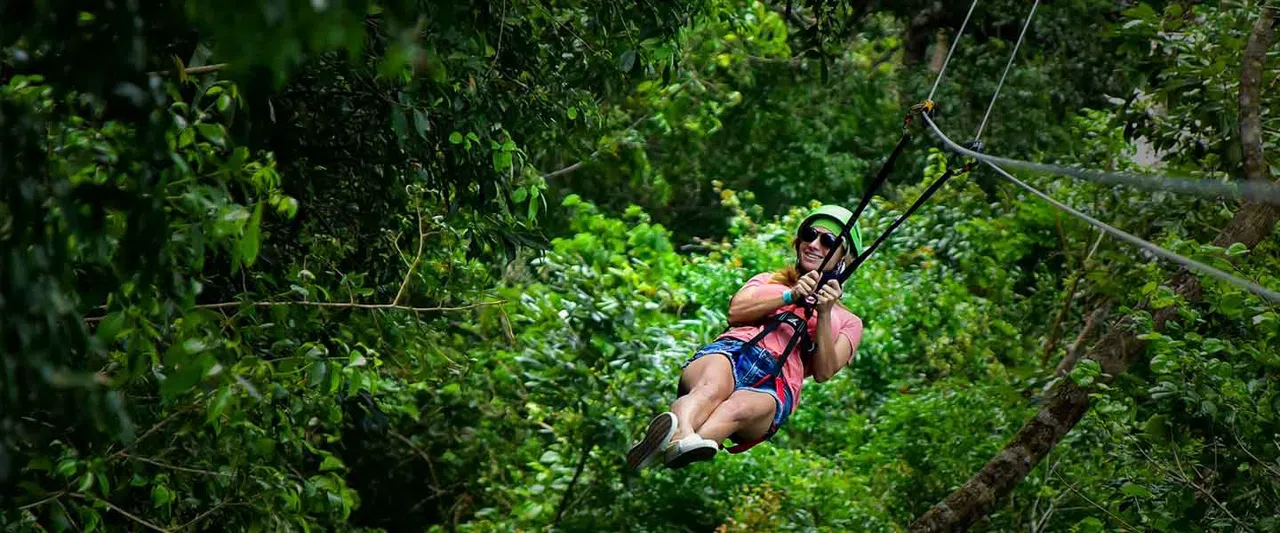
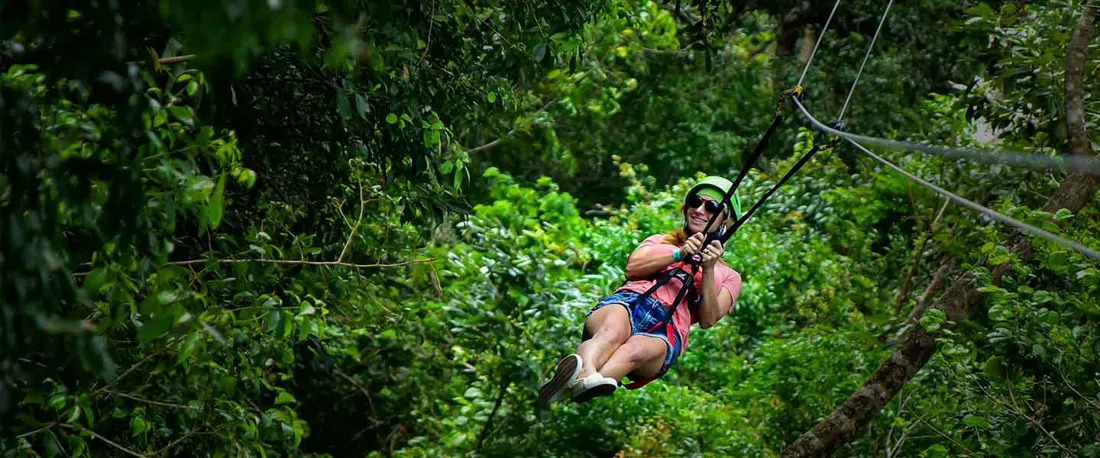
Boca del Puma Eco Park (Km 16, Ruta de los Cenotes) is the strongest option on this road for a mixed group, and the one that openly breaks the early rule: it opens at 10:00 and runs to 18:00 daily, so there is no beating the buses here because the buses are part of the model. Adventure packages run roughly $60–90 USD; walk-in entry to the cenotes alone is cheaper, and worth asking for at the gate if half your party has no interest in an ATV. Two cenotes for the swimmers, ziplines and a restaurant for the ones who will not get in: that is the honest reason to come. Book ahead in high season.
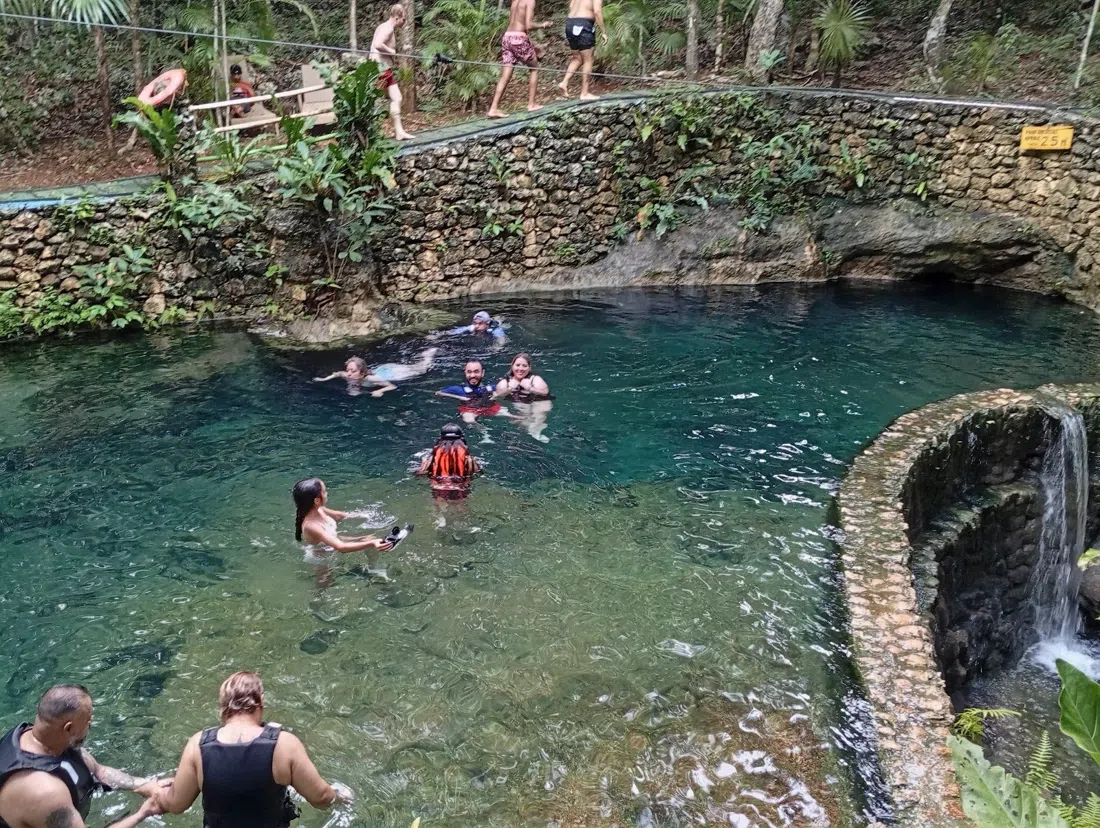
Cenote Las Mojarras (Ruta de los Cenotes, further inland) costs 250 MXN (about $14 USD) and is where this road stops being a delicate nature walk and becomes a swimming hole. It is large, open, unfussy, and deep enough for the high jump platforms, which is precisely the point for some groups and precisely the problem for others. If someone in the party is nervous about depth or about teenagers cannonballing near them, do not make this the first stop.
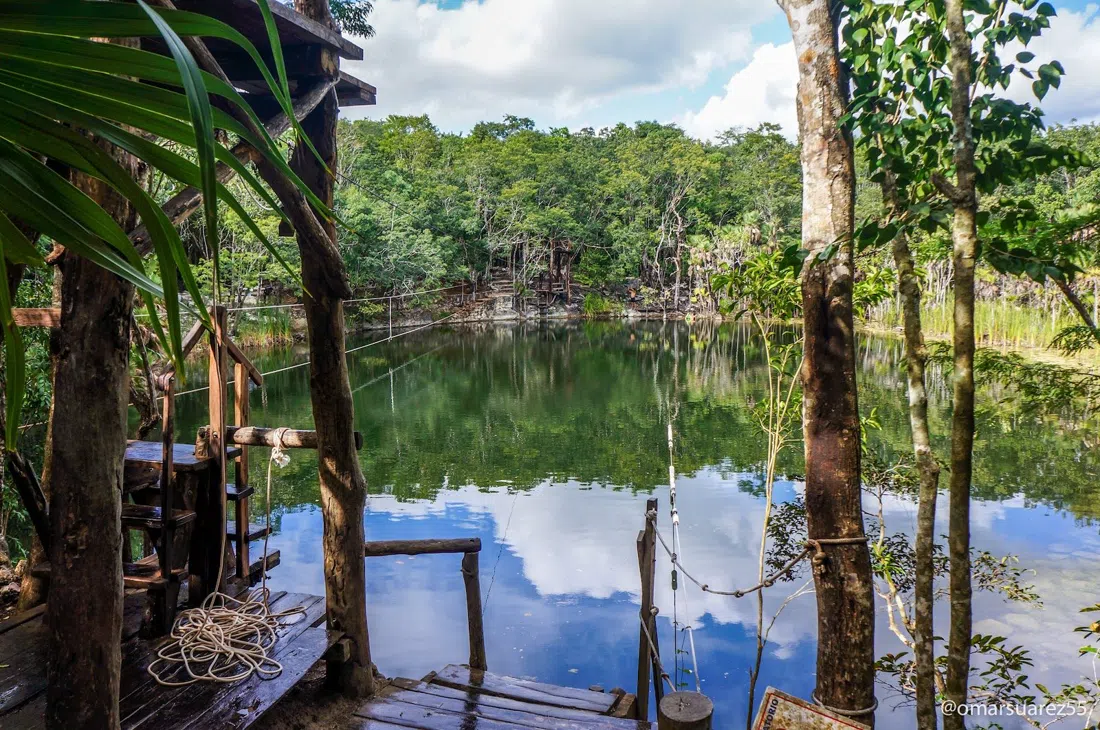
Cenote Verde Lucero (Ruta de los Cenotes) is the best value on the whole route at 200–300 MXN (roughly $11–16 USD), because the life jacket, the zipline and the jump platform are all inside the gate price rather than sold on at the deck. The colour is genuinely that green: algae and mineral load in an open pool under direct sky, not a filter and not a lighting rig. Wide deck, easy for a group, gentler than Las Mojarras if you want an open pool without the leap.
Cenotes Zapote Ecoparque (Ruta de los Cenotes) is the one stop on this road with a world-class geological object in it. Zapote holds the largest known display of Hell's Bells anywhere, bell-shaped calcite formations that hang below the waterline, grown in a chemical layer most cenotes do not have. The important, slightly annoying detail is that the ordinary swim does not show them. Entry to swim runs about $35 USD; the all-inclusive guided circuit with buffet is about $99 USD, and that is the one that takes you down to look. Pay for the circuit or accept that you have seen a pleasant cenote and missed the reason it is famous. Booking online takes adult, child and senior counts, circuits run in batches, and block bookings go through WhatsApp. It is built for groups and it behaves like it.
Going in under the roof
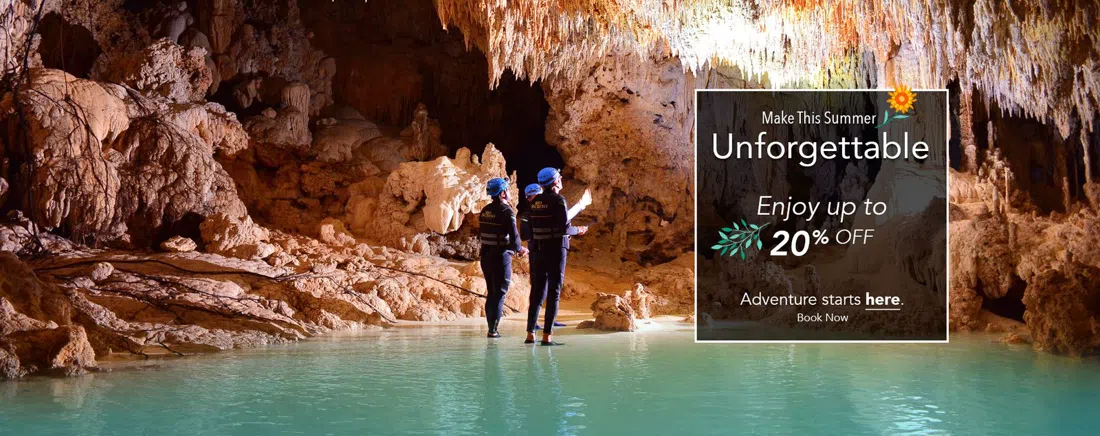
Río Secreto (signed off Highway 307, roughly 65–70 km south of Cancun) is the counter-argument to every open swimming hole on this list. It is a partly flooded cave river, walked and swum with a specialist guide in groups capped at ten, with wetsuit, lockers, towels and a regional buffet included in the $89 USD adult / $64.50 USD child (4–11) price. Open daily from 09:00. The cap is the whole product: it still feels like a cave rather than a queue. This suits couples and anyone who found the open cenotes too much like a municipal lido. It does not suit claustrophobes, and there is no free swimming, because you go where the guide goes.
Parque Dos Ojos (coast side, roughly 105 km south of Cancun) is six cenotes on one site (Dos Ojos, Jaguar, Nicte-Ha, Misterio Maya, Monos and El Pit) and part of Sac Actun, the largest mapped underwater cave system on earth. Here the scale of the limestone story stops being an abstraction. Open 08:00–17:00, last entry 15:30; 250–400 MXN per cenote, a guided two-cenote tour at 1,200 MXN, certified diving from 400 MXN. Reservations are advised December to April. Read the pricing carefully before you arrive: you pay per cenote, so a family of four wandering happily between three of them is a different number from the one on the sign. El Pit is open but restricted to advanced certified divers, and no amount of enthusiasm at the desk will change that.
The cheap gates on the highway south
Cenote Azul (off Highway 307, roughly 70 km south of Cancun) has the cheapest gate here at 150 MXN, about $8 USD, and it is the family default for a reason: you can stand ankle-deep on the shelf and be out of your depth twenty metres later, so toddlers and confident swimmers can share a pool without anyone panicking. It is completely group-tolerant. Two more cenotes sit within ten minutes on the same stretch of highway, each with its own separate gate and its own separate ticket, so a single unhurried afternoon can cover the corridor without driving more than a few minutes between swims.
Casa Cenote (coast side, roughly 110 km south of Cancun) is a wide mangrove-lined channel rather than a shaft, formerly known as Cenote Manatí, and it is the one place on this route where you can watch the freshwater lens meet the Caribbean. Put a mask on, swim slowly toward the sea end, and the halocline shows up as an oily blur where the two waters refuse to mix. Entry sits in the low tier, roughly 150–250 MXN, with snorkel gear and dive guiding available from local operators on site for extra. It is wide open and easy for groups. It is also home to Panchito, a Morelet's crocodile of about two metres, with no recorded attacks; the guides know where he tends to be, you keep your distance, nobody feeds anything. If that is a dealbreaker for your party, swim somewhere else rather than find out at the water's edge.
Snorkelling and jumping at the far south
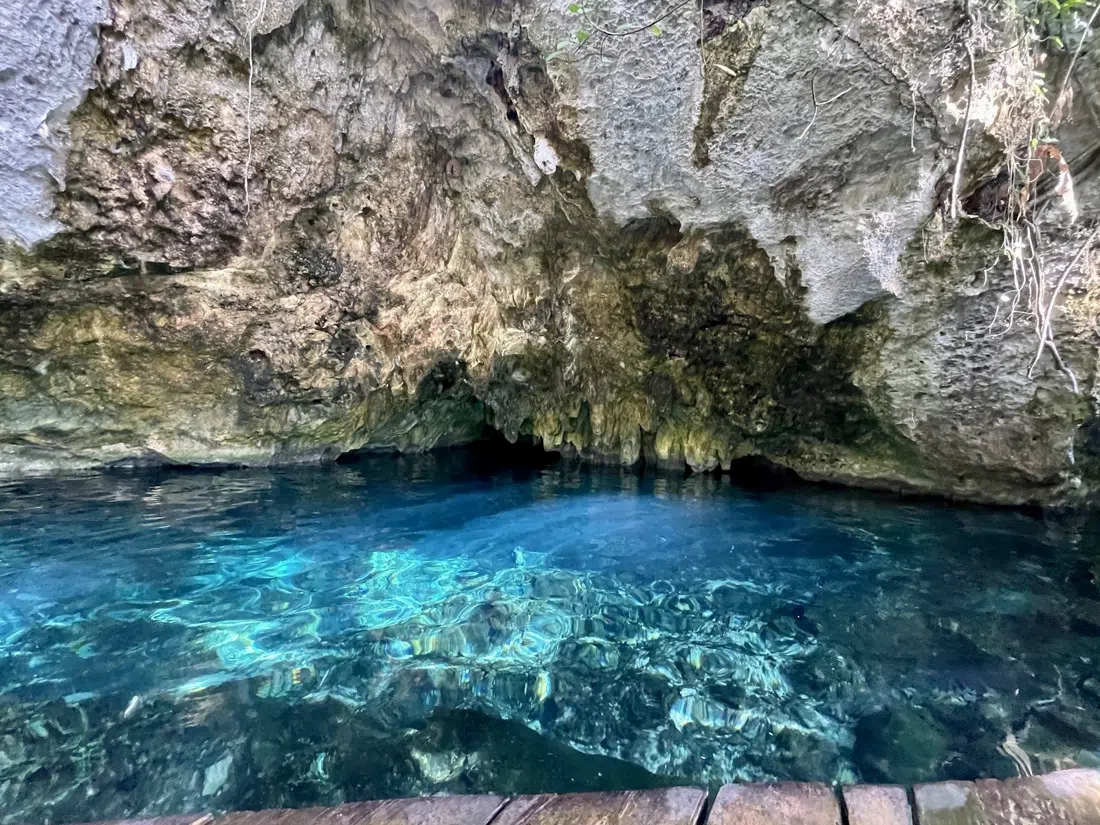
Gran Cenote (roughly 130 km south of Cancun, about an hour and three quarters by car) is still the best single cenote on this list for snorkelling, and the clearest possible case for the pre-bus ritual. At 08:00 there are turtles and empty water; by 11:00 there is a full car park and a wait. Open 08:00–16:45 with last entry 16:15. Entry is around 500 MXN (roughly $27 USD), pesos in cash only, with no ATM on site, and reported rates vary, so confirm at the gate rather than budgeting to the peso. Get a group in at opening or do not bother with this one at all.
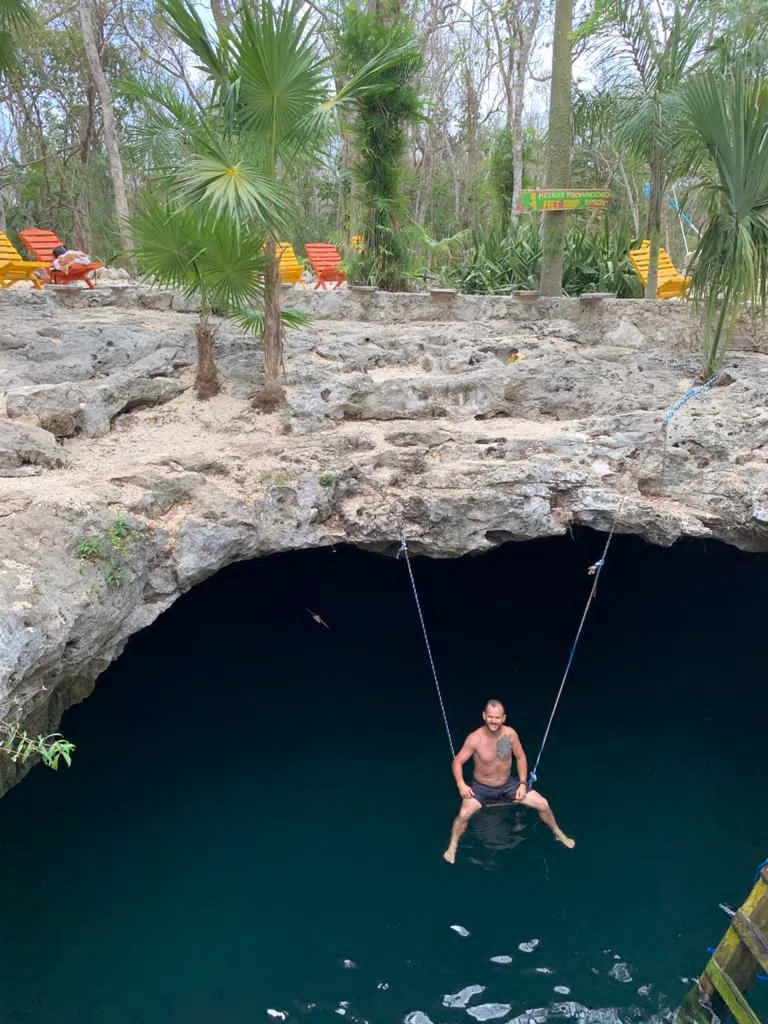
Cenote Calavera (five minutes' drive inland from the town at the southern end of the corridor) is the purest jump cenote here: a flat rock lid with holes in it, one big enough for a ladder and two smaller ones people leap through. Open daily 09:00–17:00, 250 MXN entry plus 50 MXN for a life vest, diving by prior request only. The footprint is small, a place for six rather than sixty, and a coachload ruins it for everyone including the coachload. Sunlight comes through the holes roughly 10:00–14:00; outside that window it is an atmospheric dark hole and the photographs are dull. Time it, or skip it.
Inland for the light and the co-operative
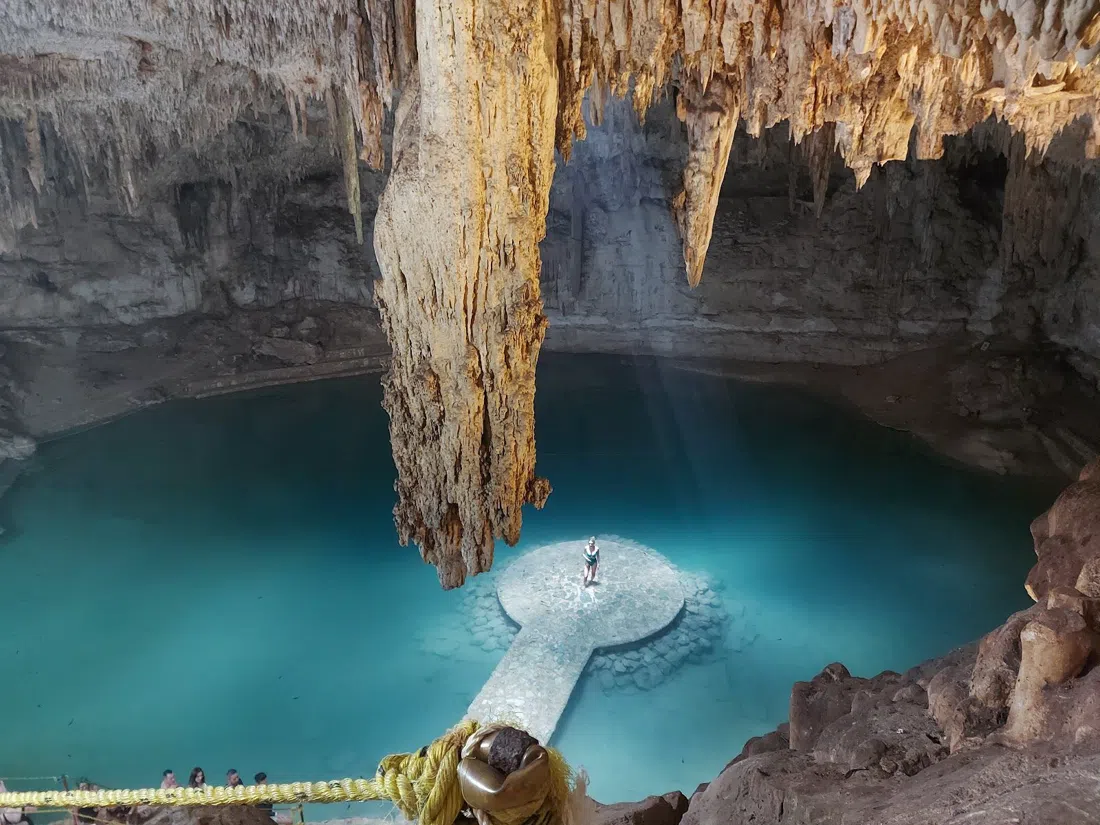
Cenote Suytun (ecotourism ranch inland, roughly 200 km west of Cancun, about two and a half hours) is the most photographed cenote in the Yucatán, which is both the reason to go and the warning. A stone platform sits under a hole in the roof, a beam lands on it for a narrow window around midday, and the queue for that platform forms with the beam. Entry is 250 MXN for a foreign adult, with reductions for Mexican nationals, children and students; two cenotes are included on the one ticket; open year-round 09:00–17:00 with last entry 16:00; life jacket included, and booking in advance by PayPal saves 50 pesos. Expect to wait your turn on the platform and treat the second cenote as the place you actually swim.
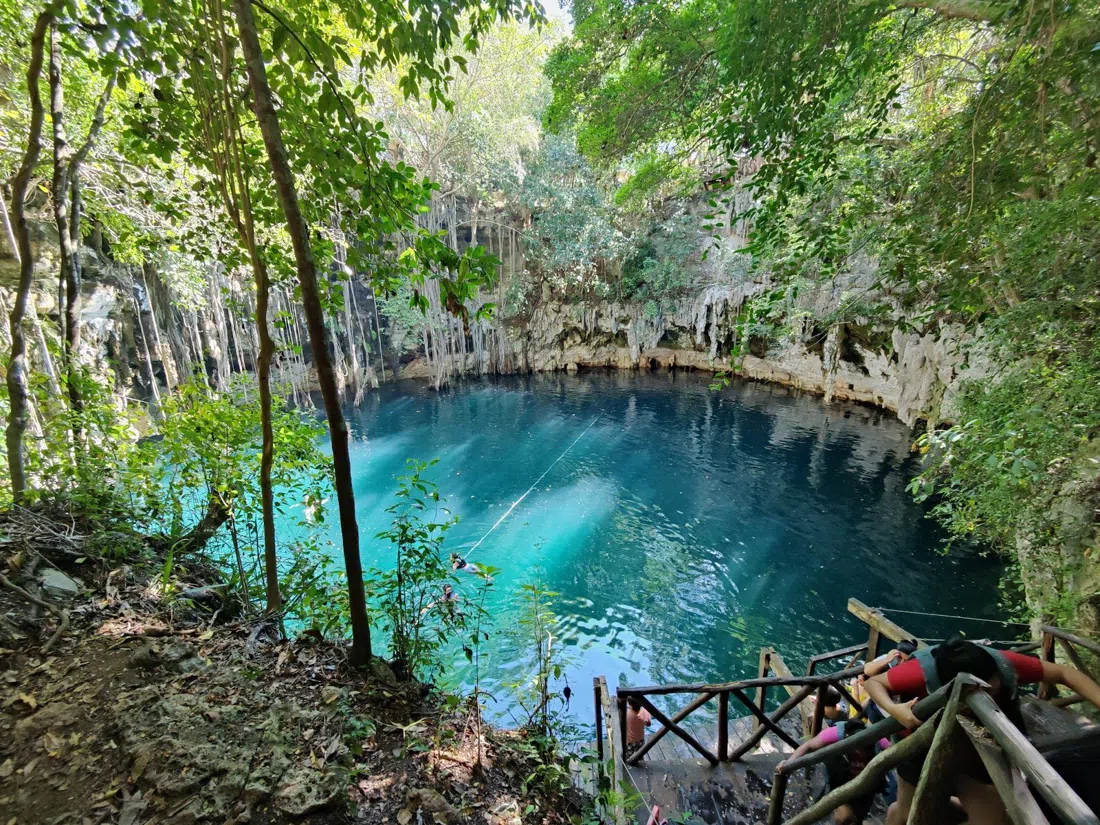
Cenote Yokdzonot (village co-operative, under 20 km from Chichén Itzá) is the rare case where the ethical pick is also the quieter swim. It is run by the Zaaz Koolen Haá women's cooperative, who cleared the cenote and built the operation themselves, and entry sits in the cheapest tier at around 100–150 MXN. Open 09:00–17:00 daily, with showers, changing rooms, a restaurant, a pool, camping and parking, comfortable enough for a full coach. If your day already involves the ruins, this is the honest alternative to the cenote that the ruins traffic pours into, and the money stays in the village.
If nobody in the group wants to drive
Xenotes Oasis Maya by Xcaret is the only option listed here that actually solves transport: hotel pickup between 08:00 and 10:00 Monday to Saturday, a certified guide, minimum age six, $130 USD adult and $98 USD child (6–11). It is also the cleanest way to see all four cenote forms (open, semi-open, ancient and cavern) in one loop, which is a genuinely good structure for a first visit. Be clear about what the premium buys, though: logistics, not exclusivity. You travel as a group, and a pickup window that ends at 10:00 means you are not going to be first into anything.
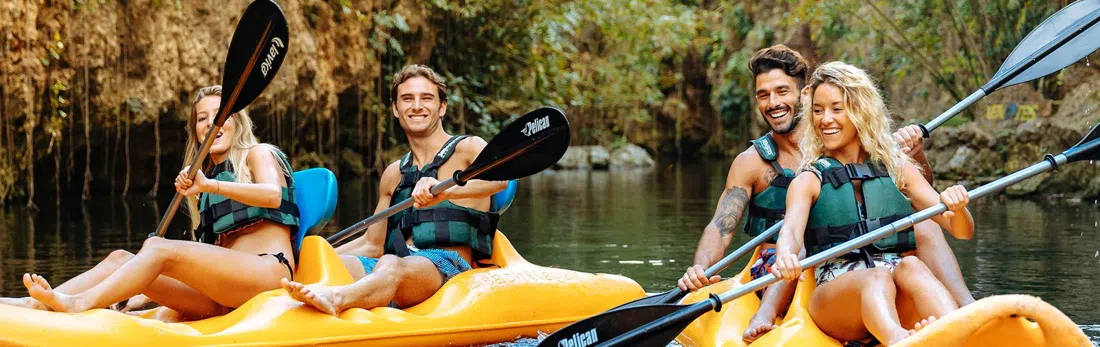
Selvática is the volume operator, with coach transfers from Cancun hotels, ages three and up admitted, eight and up to zip solo, and packages running roughly $109–169 USD per person. It is the adrenaline end of the spectrum rather than the geology end: the ziplines are the product and the cenote is the cooldown afterwards. That is fine if it is what the group came for, and the wrong choice entirely if one person in it wanted to look at limestone.

Cash, cars and the shape of the day
A rental car is the only way to run the pre-bus ritual properly, because no scheduled service gets you to a gate at opening. Highway 307 south is fast dual carriageway; the Ruta de los Cenotes inland is two-lane with heavy topes (speed bumps) that will punish a low car. For the far inland pair, the toll road west is faster and worth the fee. Without a car, ADO coaches run south from the bus terminal downtown and colectivo vans work Highway 307 and will drop you at signed turnoffs, but you then walk in from the highway, sometimes a kilometre or more with no shade. Organised pickup is the realistic no-car answer.
Bring pesos in small notes. Several gates are cash-only, and Gran Cenote explicitly has no ATM on site. For a car of four doing two or three gates, 1,500–2,000 MXN in hand covers entries, parking, a vest hire and lunch without anyone hunting for a machine.
On timing: in the water at opening, out by 10:30, eat inland afterwards. The two exceptions are Calavera, which wants 10:00–14:00 for light, and Suytun, whose beam lands near midday.
Leave sunscreen and repellent in the car. You will be asked to rinse, and at several gates you will be turned back. A rash vest solves the sun problem without chemistry. Add a towel, water, a dry bag and your own mask; rented masks fit badly and the snorkelling is the point at two of these stops.
A cheap day is 150–300 MXN per person plus fuel. A mid-range day with two gates and a vest lands at 500–1,200 MXN. Guided and transport-included options run $89–169 USD per person.
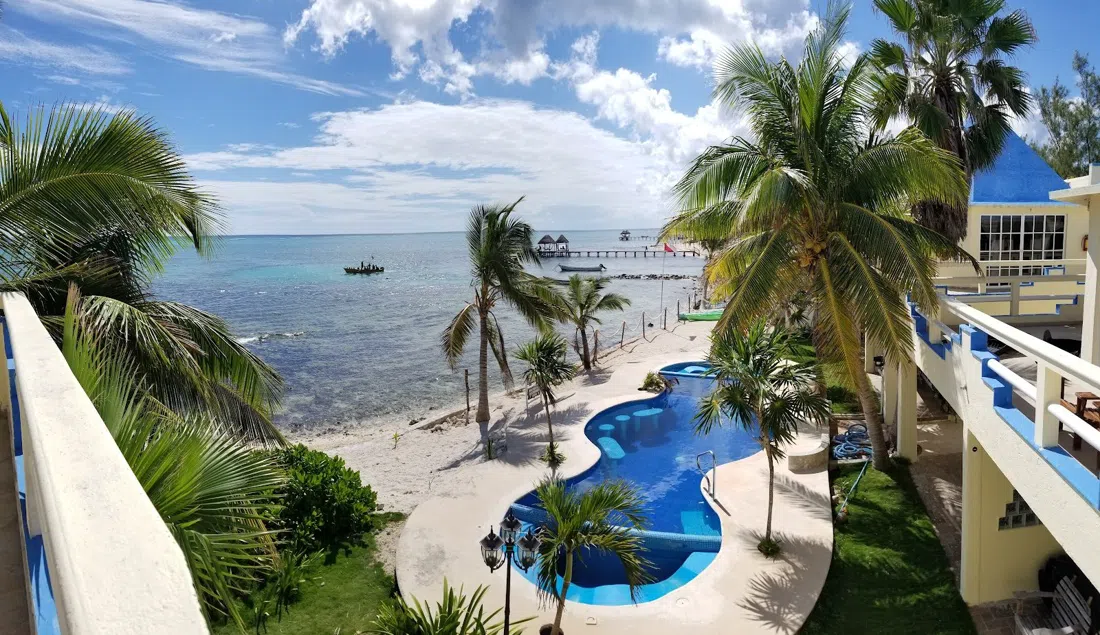
Staying downtown puts you closer to Highway 307 and the bus terminal than the hotel zone does, which is worth twenty minutes of sleep on an early start; the Cancun hotel search will show both. Either way, ask reception the night before whether the car comes with a full tank, because the inland stations are not where you want to discover it does not.