By one in the morning the bass is still rolling down Boulevard Kukulcán and the taxi queues outside the big clubs are three deep. A few kilometres offshore, out of sight of those dance floors, octopus hunt in the open, parrotfish sleep inside cocoons of mucus, and coral polyps unfurl to feed in the dark. The daytime version of Cancun's water is sold on every corner. The after-dark version takes a torch, a reservation, and on the best nights a sky with no moon in it.
The reef runs two shifts
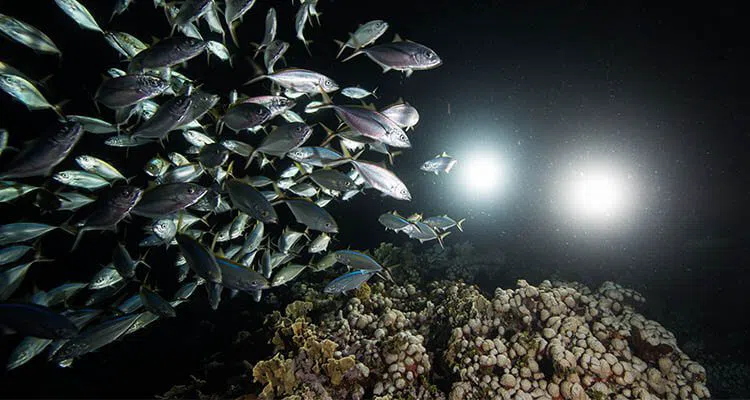
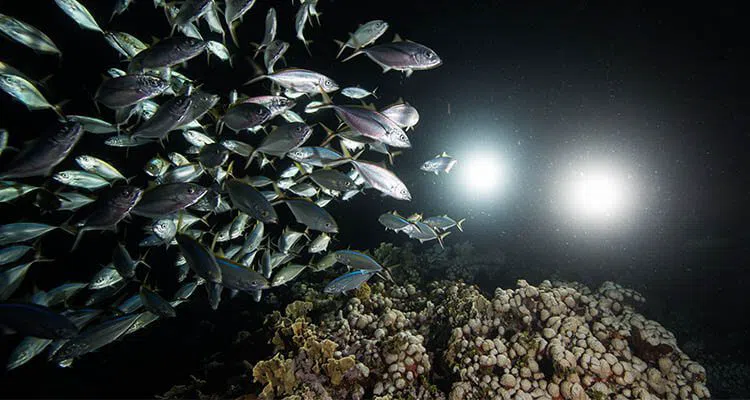
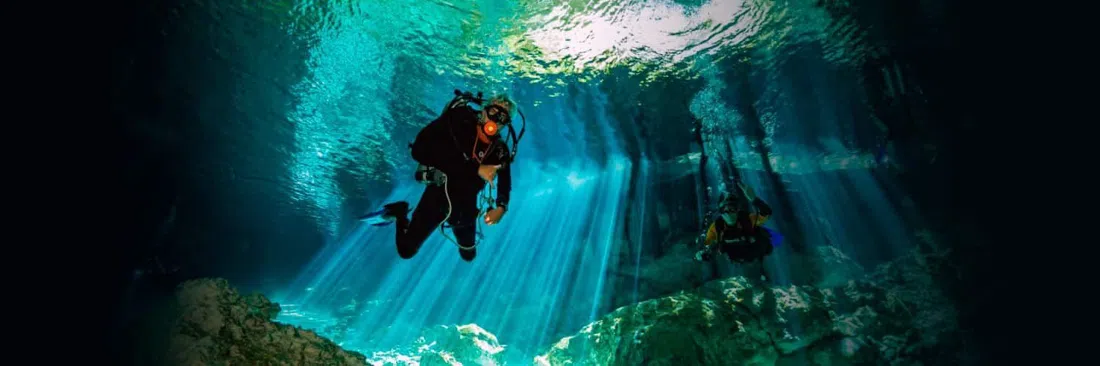
Sunset on a Caribbean reef changes the crew rather than closing the place down. The parrotfish and surgeonfish that own the coral by day wedge themselves into crevices and go still. Octopus, lobster, crab, moray eels and the larger night hunters come out into open sand. The coral changes texture as well: polyps extend to feed, so a head of brain coral that looked like wet rock at noon is visibly furry at nine at night. Under a torch the colour is startling, because there is no sunlight left to bleach it out.
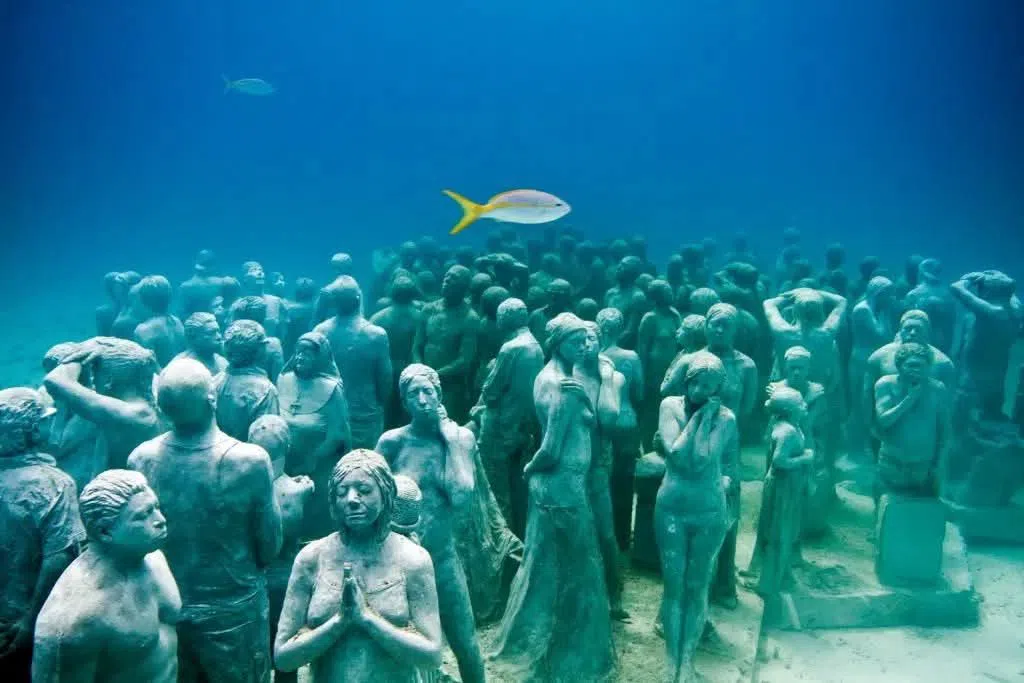
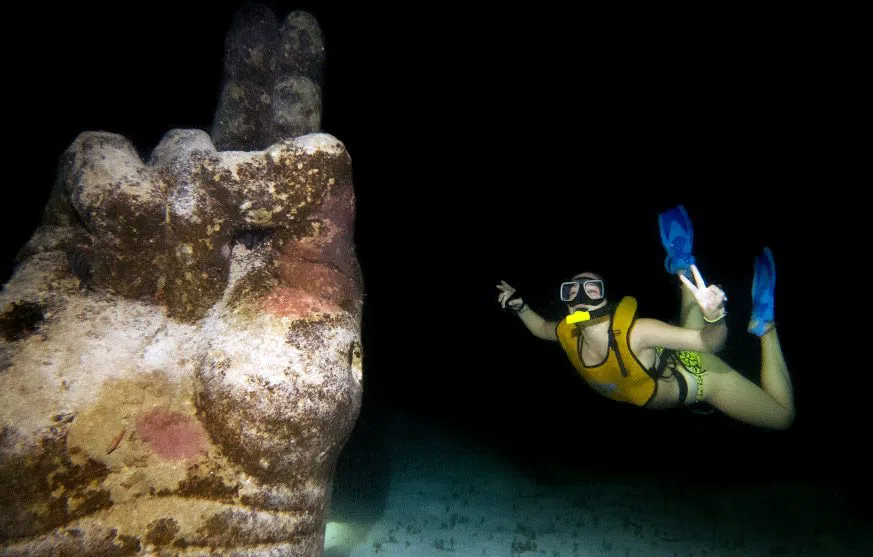
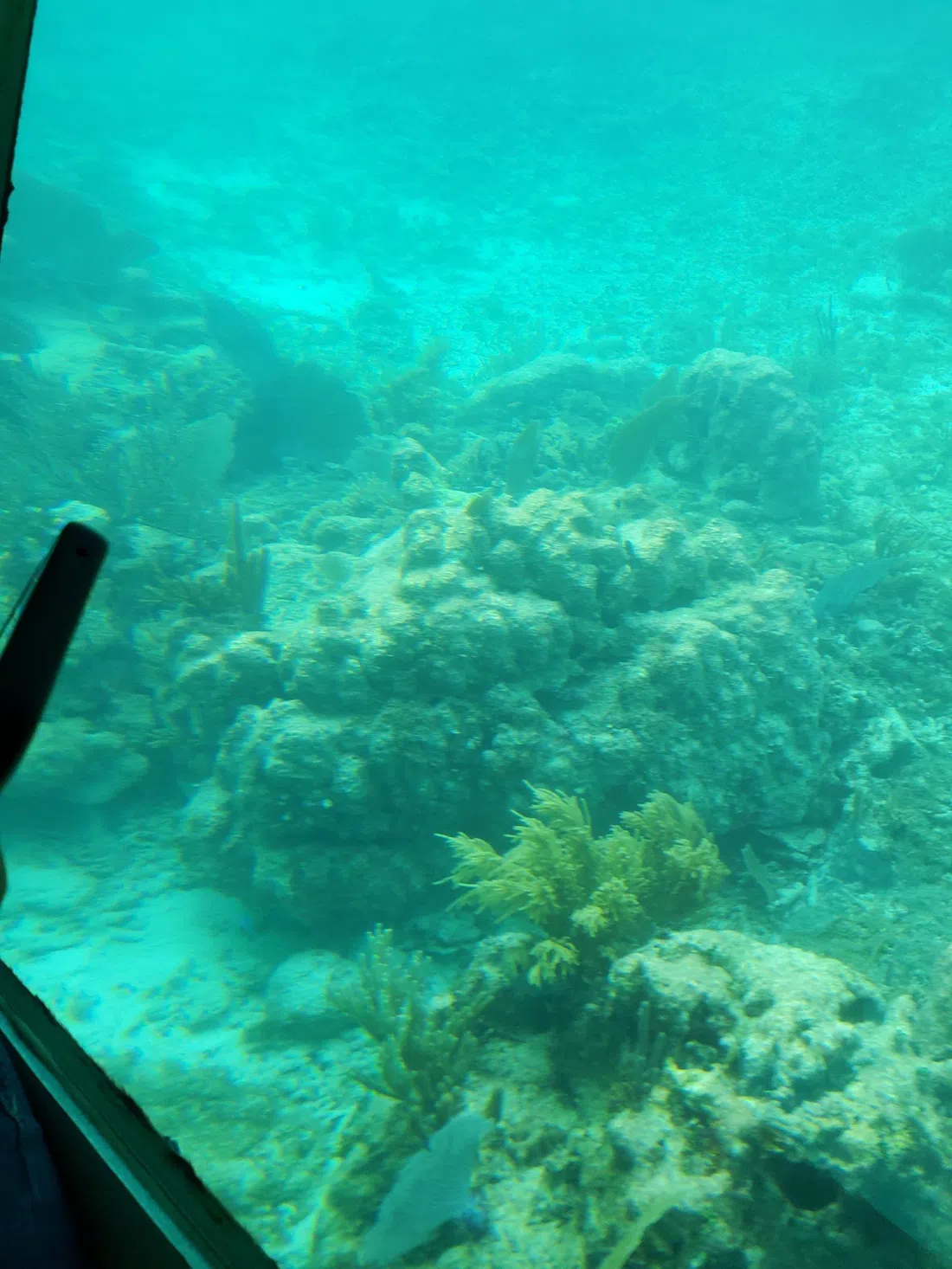
The clearest place in Cancun to watch that happen is Museo Subacuatico de Arte (MUSA) (Manchones reef and Punta Nizuc), the underwater sculpture museum sunk from 2009 onwards to pull visitor pressure off the living reef. There are 477 figures on the Manchones side for divers and 23 at Punta Nizuc shallow enough for snorkellers. Seventeen years of growth has turned the faces into sponge, fire coral and algae. At night, lit from one side by a hand torch with the rest of the water black, those colonised heads are the thing people come back talking about. There is no ticket and no gate. Access is through any licensed dive or snorkel operator, so your group size is whatever your boat takes. Snorkel trips start around USD 20 and dives around USD 119.
Where to start if you have never dived in the dark
Start with Manta Divers (diving the protected marine park down the coast), the only operator here that asks for no night-diving certification and no prior night experience. USD 110 covers round-trip transport, torches, full gear including wetsuit, and park and dock fees, which means nobody in your party needs a car or a credit card at the dock. Be clear about what you are buying, though: this dive is not on the Cancun reef. It runs about 90 minutes round trip to a calmer, better-protected site inside its own national marine park. For a first time in the dark that trade is usually worth making, because there is less swell and the visibility is better.
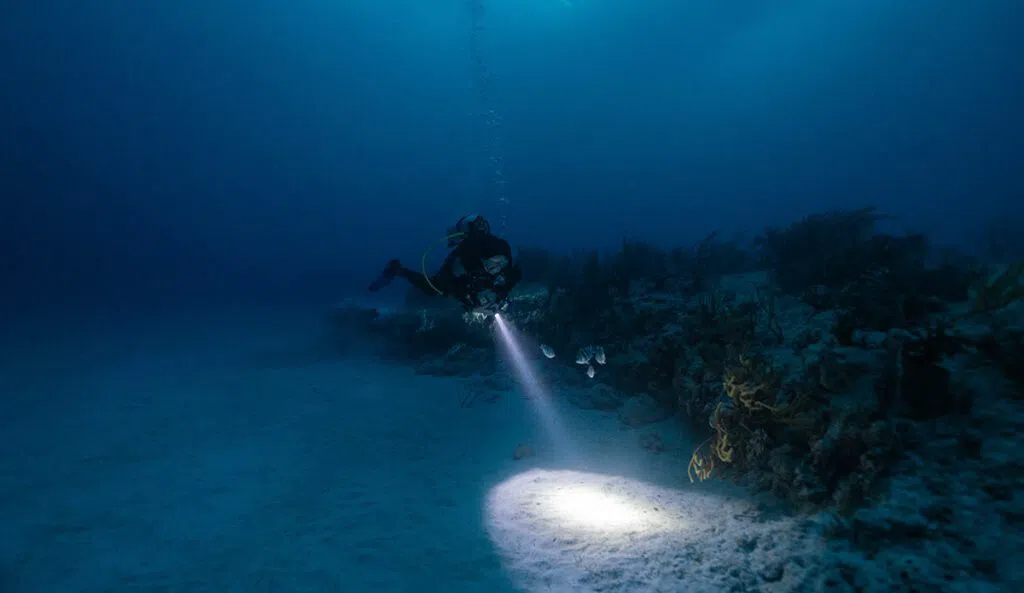
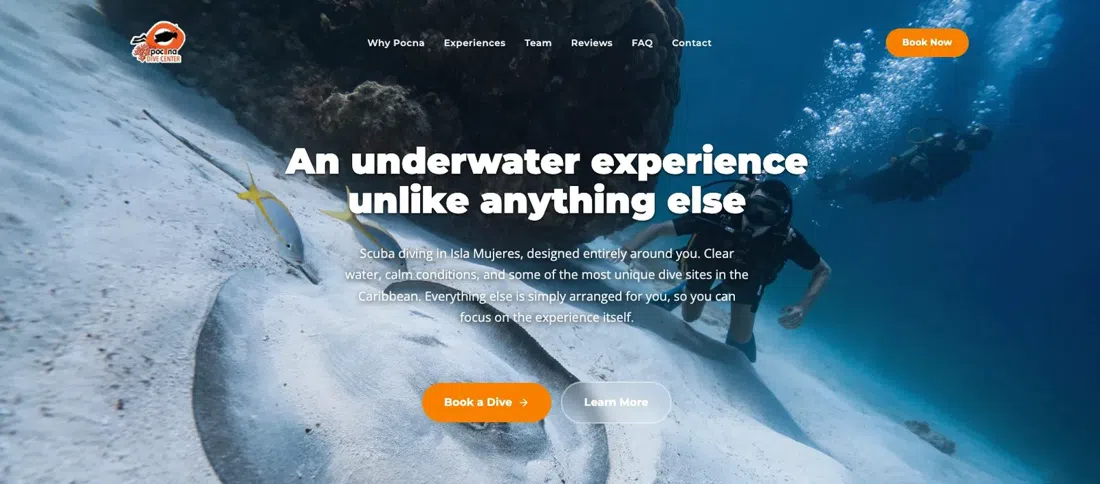
If you would rather watch the changeover than arrive after it, Pocna Dive Center (the island across the channel, a short ferry hop from the Cancun side) runs the twilight window: USD 110 for a half-day one-tank dive that drops you in at sunset and keeps you down while the day shift hands over to the night shift on the same patch of reef. It needs a minimum of two participants and runs in a private format as standard, which makes it the best-value option for a couple rather than a crowd. It is also the only PADI 5-star IDC out there, if credentials matter to you.
The gentlest profile on this list belongs to Coconut Divers (Manchones and the near reefs), who have been diving this stretch since 1994 and keep their night dive at roughly 14 metres. Shallow means long bottom times and a forgiving introduction, with no deco clock to fight on your first dive without daylight. Certified divers only, small guided groups, and one practical catch: the night schedule is not published on their web page, so you have to phone or email for it.
Black light, blue light and coral that fluoresces
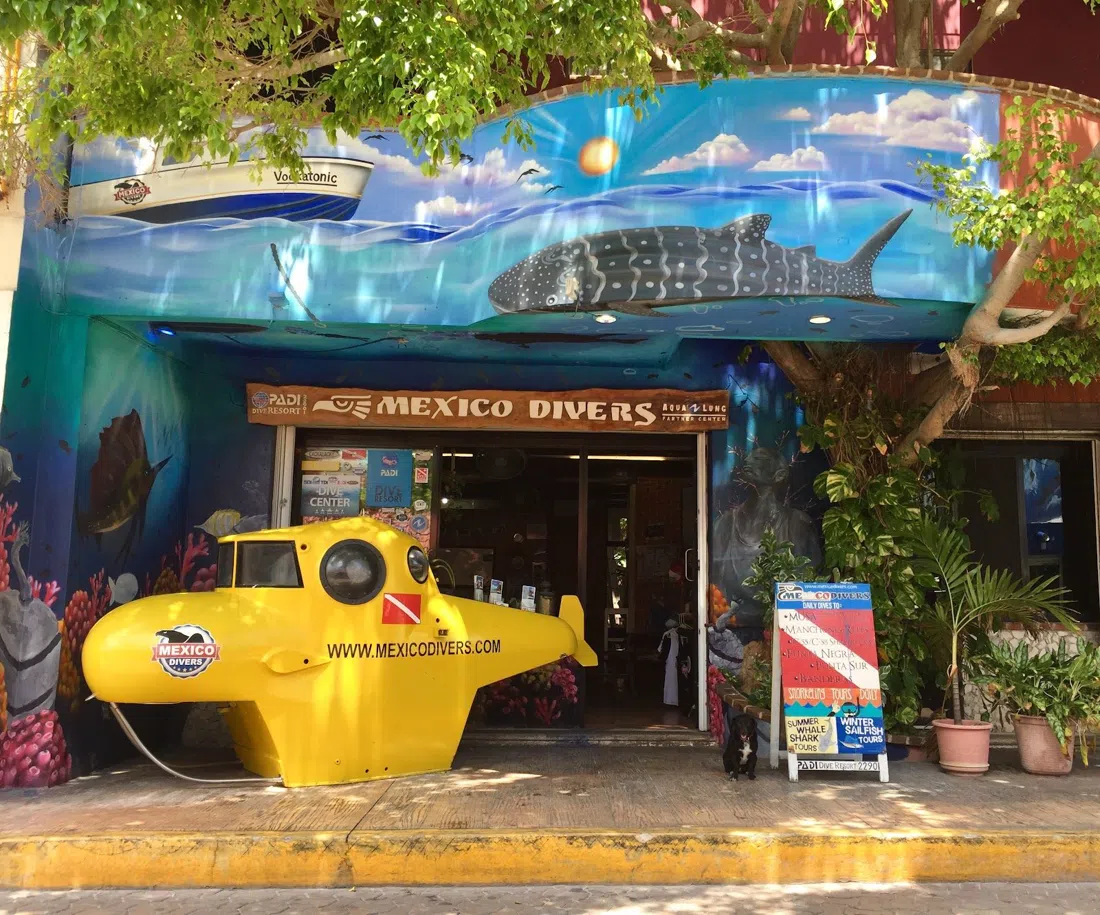
The most distinctive dive in the Cancun orbit is the fluorescence version, where a blue excitation light makes the coral's own proteins glow back at you in greens and reds. Mexico Divers (Cancun reefs, boat from the marina side) runs it at 2,700 MXN against 2,400 MXN for their standard night dive, and the extra few hundred pesos buys you the only genuinely different thing you will see underwater here. Up to eight divers go on the standard boat; a private charter starts at 10,000 MXN for four. The requirement is enforced: you need Advanced Open Water or prior night-dive experience, and they will ask. This is not the dive to fib about on a form.
The cheaper route to the same effect is Aqua Adventures Eco Divers (Manchones), who hand out black lights as standard on a USD 120 one-tank dive of roughly two hours and reliably find sleeping turtles and octopus on the way round. Reservations are not a formality: the night dive is not guaranteed to run without one, so booking the day before is the difference between going and standing on a dock. Year-round, small guided groups.
Booking as a group of four or more
Night diving is where group size stops being a comfort question and becomes a safety one, because the risk is losing people in the dark. Scuba Total (Cancun reefs) handles that better than anyone here, with a strict four-divers-to-one-instructor ratio. Book as a four and the guide is yours alone. USD 135 covers one tank, gear, torches and park entry; wetsuit and dive computer are extra, which is worth budgeting for. Departure time floats with the season rather than sitting at a fixed clock hour, so confirm it the day before.
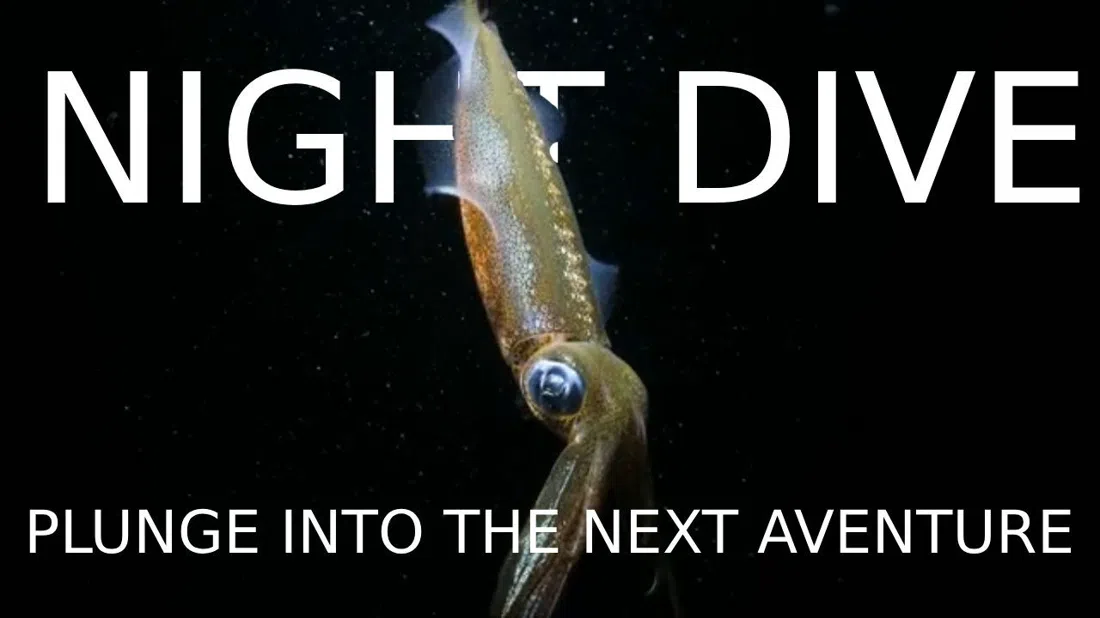
Solo Buceo (Hotel Zone) has been operating since 1993 and has the cleanest booking process of the lot: the form takes 2 to 9 passengers on one boat, so a party of friends simply fills a departure instead of being split. USD 124 per diver includes one tank, gear and park fees, torches are in the kit list rather than an upsell, and the timings are published: 6pm check-in, back by 9pm. An Open Water card is required and checked.
For groups who still want their evening afterwards, A' HA' Scuba Diving (Cancun reefs) keeps the tightest schedule here: in the water at sunset, dry by 8:30pm, which gets you to a dinner table rather than replacing it. USD 135 per diver, a minimum of three divers for the trip to run at all, and private boat charters quoted on request, with four to six people the sweet spot. Open Water card shown at check-in.
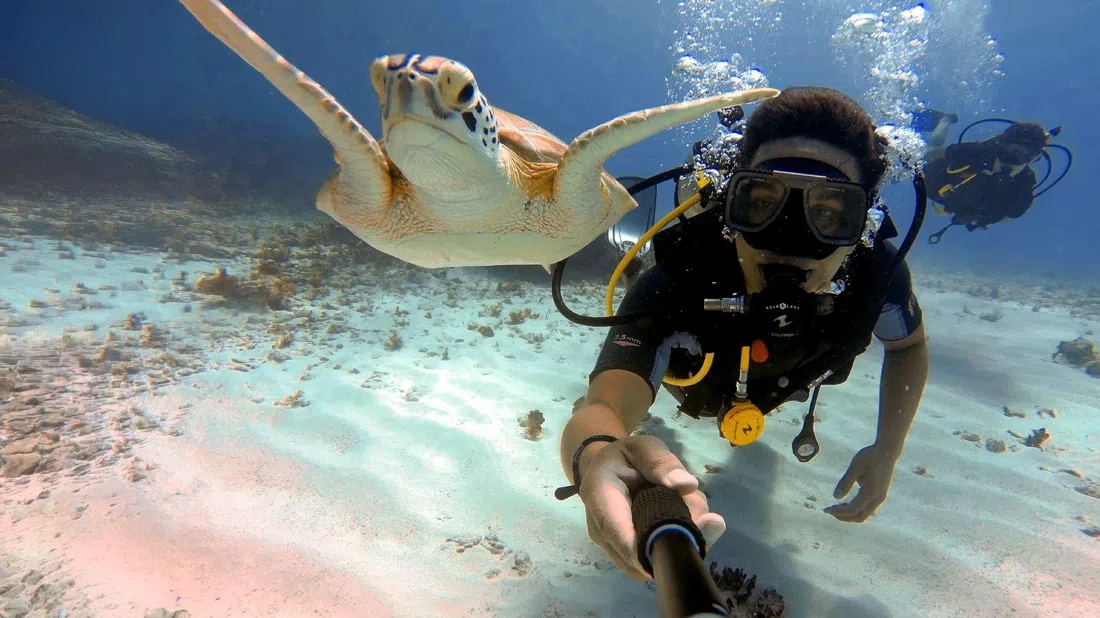
Always Diving (Cancun reefs, open daily 7am to 5pm) is the pick if you care who is leading. Alvaro has taught these reefs for more than 40 years, keeps the night profile inside about 35 feet, and knows which ledge the octopus actually uses. That is the whole pitch, and on a night dive it is a good one. Day dives start from about MX$2,240 with the night dive quoted on request; they also run longer group trips further afield if your party is building a week around diving.
Glowing water without a tank
Bioluminescence is the part most visitors get wrong before they arrive, usually about where it happens. Total Snorkel Cancun (launching from Punta Sam, north of the Hotel Zone) runs the only verified bioluminescence swim operating out of Cancun itself: daily at 7pm, about 90 minutes in the water, age 12 and up with prior snorkel experience, and a hard cap of six to eight swimmers, with a separate desk for private parties. It is premium, around USD 350 per person at rack rate on their own site and materially cheaper booked through third-party resellers, so spend five minutes comparing before you commit.
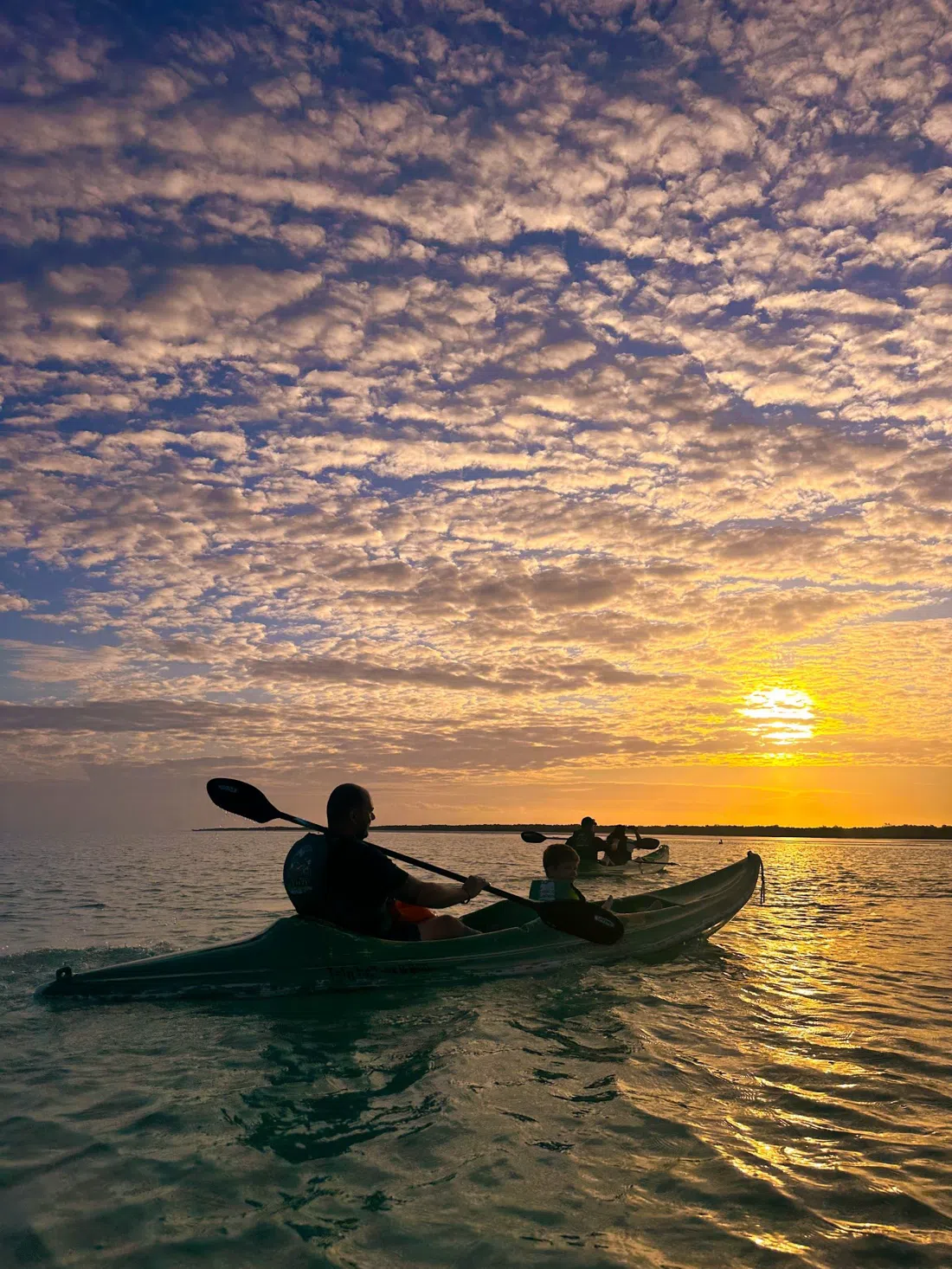
The Yucatán's genuinely reliable glow is further out. Kayak Scouts Holbox (the lagoon island roughly three hours north by road and ferry) is the best-reviewed small-group paddle of its kind, capped at 12 to 14 people with a guide, around USD 50 to 55 for about an hour and three quarters, and it lets you get in and swim in the plankton rather than watch it from a seat, which is the part that matters. It has no website of its own; bookings go through third-party platforms, which is normal for operators out there. VIP Holbox (same island) is the group-friendly alternative, taking 1 to 16 paddlers with pickup in selected zones at 900 MXN per person, rising to 1,400 MXN for a post-midnight start when the water is darkest.
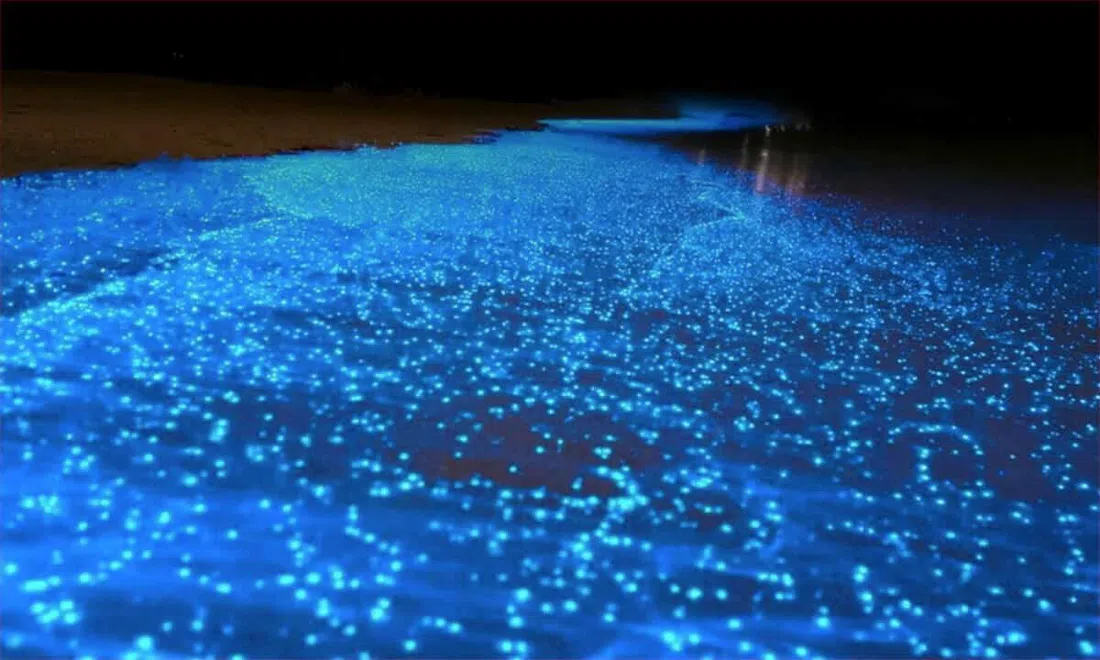
Bioluminescence only works on dark nights, and a full moon washes it out completely. Check the lunar calendar before you book flights, tours or a night off, and treat the island trip as an overnight rather than something you squeeze into a Cancun evening.
What the lagoon actually offers after dark
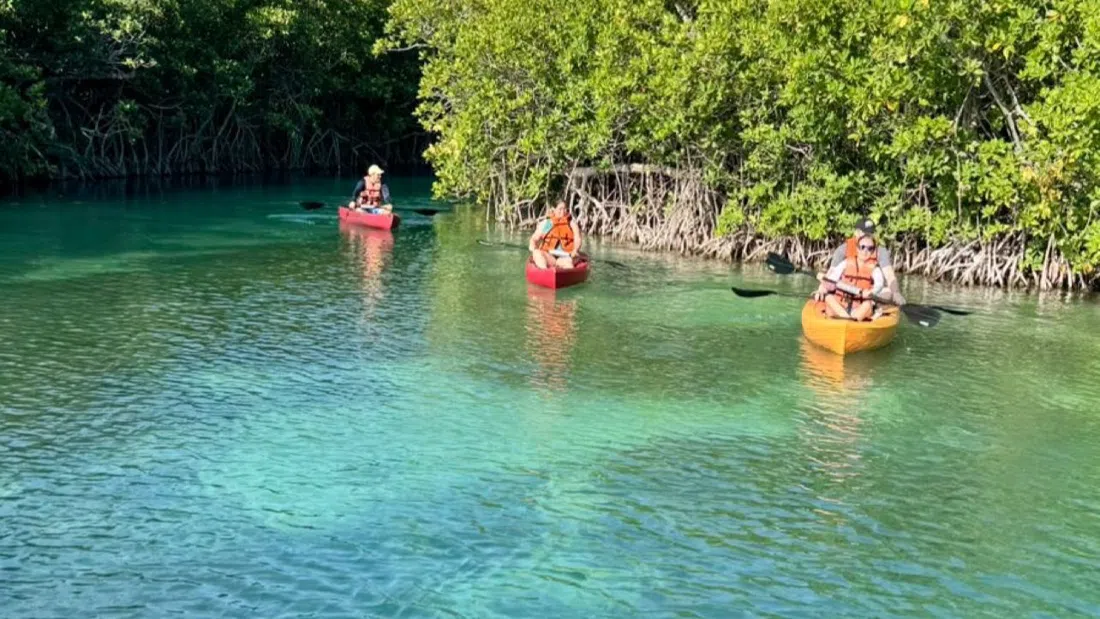
The Nichupté Lagoon does not glow, whatever you are told at a hotel desk, and there is no bioluminescence operator on it. 360 Kayak & Paddleboard Tours Cancun (Nichupté Lagoon, Hotel Zone) have been running since 2010 and are refreshingly straight about this: their 4pm slot is a sunset paddle through mangrove channels, not a bio trip. Take it on those terms and it is the best mangrove hour in the city: 900 MXN in a small group, 1,550 MXN per head private, 90 minutes, and half price if you are carrying a Go City pass.
To be out on the lagoon properly after dark, the only verified option is Aquaworld (Hotel Zone marina), a 30-year institution and the one large-group operator here, taking coach-sized parties on fixed departures with hotel pickups. The Cancun Queen runs a 90-minute after-dark lagoon cruise in the USD 50 to 90 band, and their daytime MUSA snorkel is the easy counterpart if half your party does not dive. Ages 5 to 60. Their website renders badly; book by phone or through a reseller rather than fighting the form.
If you want to stop needing a guide
For anyone who expects to dive at night again elsewhere, Cancun Scuba Center (Cancun reefs) teaches the PADI Night Diver specialty over three dives at USD 380 plus USD 65 for materials. You learn light signalling and night navigation properly instead of following a torch for an hour, and the format suits pairs or a small group learning together. Only the course price is published, so confirm dates directly.
Transport, cash and timing
Most dive shops sit on the lagoon side of the Hotel Zone strip or at the marinas, and the R-1 and R-2 buses run Boulevard Kukulcán late into the night. You pay the driver in cash; there is no ticket machine. Punta Sam is the exception: it is north of the centre, so allow 40 minutes by taxi from the middle of the Hotel Zone and more in dinner traffic. If you want to walk to a 6pm check-in rather than negotiate a cab in the dark, stay mid-strip on the lagoon side, and the Cancun hotel search is the fastest way to see what is near the marinas.
Carry pesos. Prices quoted in dollars get converted at the shop's own rate, card terminals at docks are unreliable, and park and dock fees are the usual sting. The operators above state what is included, so ask any other shop the same question before you pay. Budget USD 110 to 135 for a standard guided night dive, 2,400 to 2,700 MXN for the fluorescence version, 900 to 1,550 MXN for a lagoon paddle, around USD 350 for the Cancun bioluminescence swim and USD 380 for the specialty course.
Schedule the dive for your second or third evening rather than arrival day, and keep your last dive at least 18 hours clear of your flight home. Book 24 to 48 hours ahead in high season, longer if you need a private boat. For everything this city does between sunrise and sunset, the Cancun guide covers the daytime half.