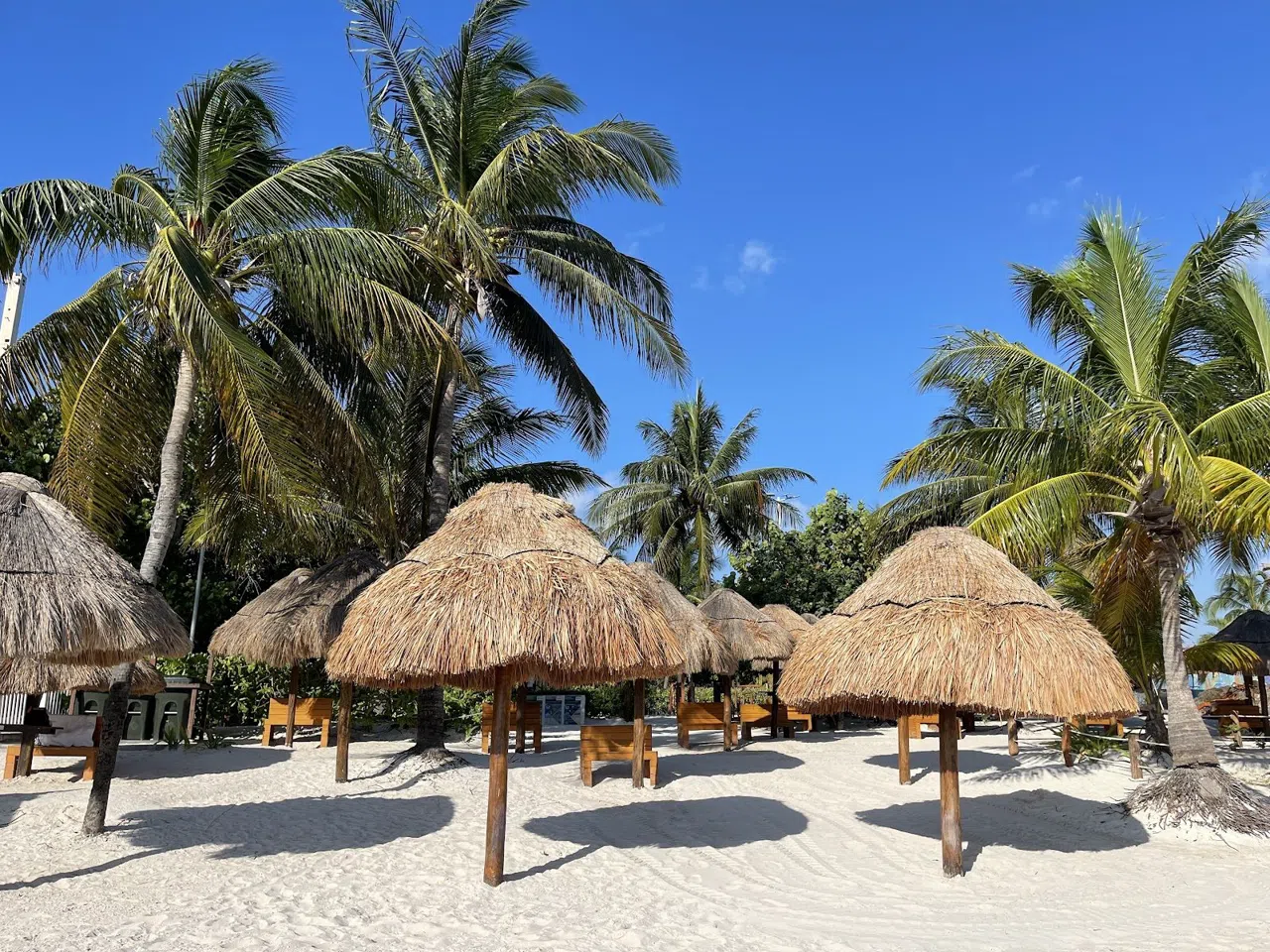
By the last week of June the wind along Boulevard Kukulcán carries a smell before you see anything: warm and sulphurous, somewhere between a rock pool and a compost heap. On the sand at Km 12 a line of brown weed sits two metres wide and shin-deep, and a crew with rakes is already working it back towards a tractor before the first loungers go out. Six kilometres north, on the other side of the same headland, the water is glass and a family is standing waist-deep fifty metres offshore.
What sargassum is and when it lands
Sargassum is a floating brown seaweed that grows in the open Atlantic and drifts west on the current in rafts that can stretch for kilometres. It is not pollution and it is not something Cancun has done wrong. The reason the city feels it so badly is geography: the beaches it is famous for face exactly the direction the weed arrives from.
The season has a shape. The first patches show up in March and April, usually thin and cleared by lunchtime. May is when it stops being an occasional nuisance and becomes a daily fact. June, July and August are the peak, when a bad morning means a windrow of weed knee-deep at the shoreline and water the colour of tea for twenty metres out. September still delivers, October tapers, and by mid-November the coast is normally clean. 2026 has been a heavy year by any measure, so the mechanics are worth understanding before you book.
But the season is the wrong unit for planning. The right unit is the day. An onshore east-southeast wind pushes rafts ashore overnight and they land at dawn; a wind shift, a rain squall or an early norte can strip a beach clean inside 24 to 48 hours. Two beaches six kilometres apart can be completely different on the same morning. So do not cancel a summer trip over it, and do not assume that one stretch of sand will be good every day of an eight-night stay. Check in the morning, be willing to move, and treat the bus as part of the beach plan.
One practical note on the weed itself. Fresh sargassum floating in the water is unpleasant rather than dangerous: slippery, occasionally itchy, and it hides your footing. Left to rot on hot sand for a few days it releases hydrogen sulphide, which is the sulphur smell that drifts into ground-floor rooms and tarnishes silver jewellery. That is an argument for where you sleep as much as where you swim. On the north-facing arm of the Hotel Zone you are largely out of it. If you are still choosing a room for a summer week, the Cancun hotel search covers both arms of the strip, and Km 1 to Km 9 is the hedge worth paying a little more for.
The bend at Punta Cancún decides your beach day
The Hotel Zone is an L. Boulevard Kukulcán leaves downtown at Km 0, runs northeast along a sandbar to Punta Cancún at roughly Km 9, then pivots hard and runs south-southeast to Punta Nizuc at Km 20-plus. Everything before the bend faces north into Bahía de Mujeres, sheltered by the island across the water and by a wide shallow shelf. Everything after the bend faces the open Caribbean and takes the drift full on.
That single hinge explains almost all of the day-to-day variation people find baffling. It also gives you a usable system: the kilometre markers are posted along the boulevard, every bus stop is known by them and every driver understands them. Learn to think in Km rather than hotel names and the whole city becomes navigable in an afternoon.
The bay beaches that usually stay swimmable
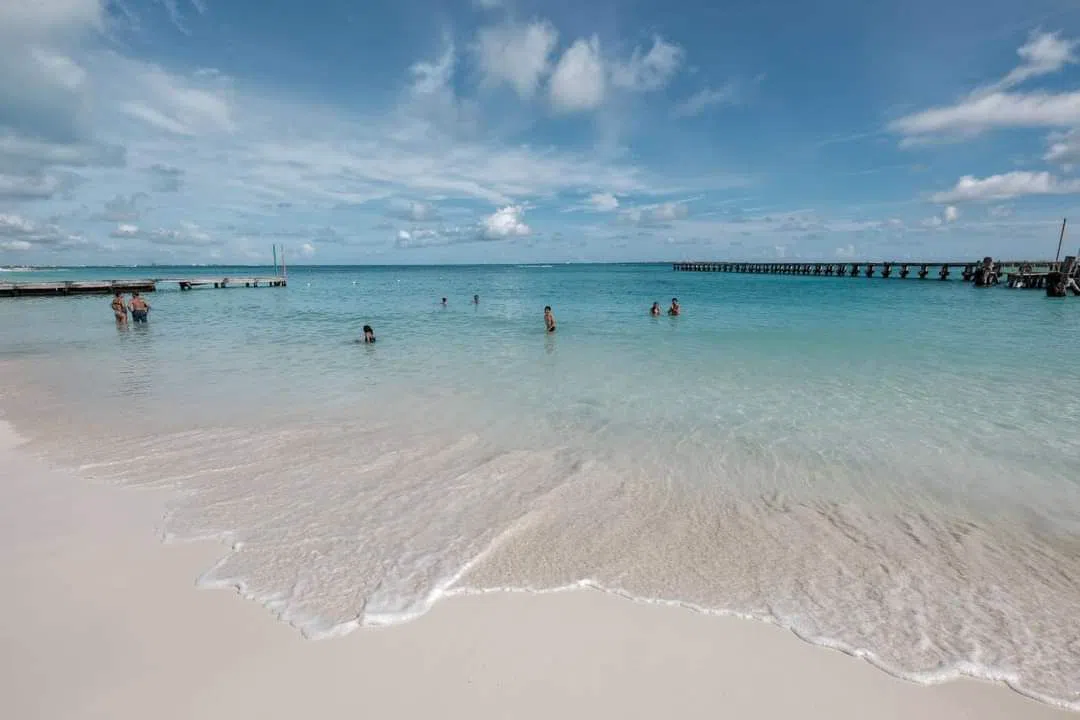
Playa Las Perlas (Km 2.5, the northern end of the Hotel Zone) is the first public beach off the mainland and the most reliable sargassum hedge on the strip. It faces north into the sheltered bay, so weed arriving from the east-southeast rarely reaches it at all. The trade-offs are real: it is small, very shallow, and a local favourite, which means weekends are crowded and the free parking is gone by 10am. There is no door policy of any kind and families are entirely at home, but a group of fifteen or more will simply take the place over. If that is you, go on a weekday morning.
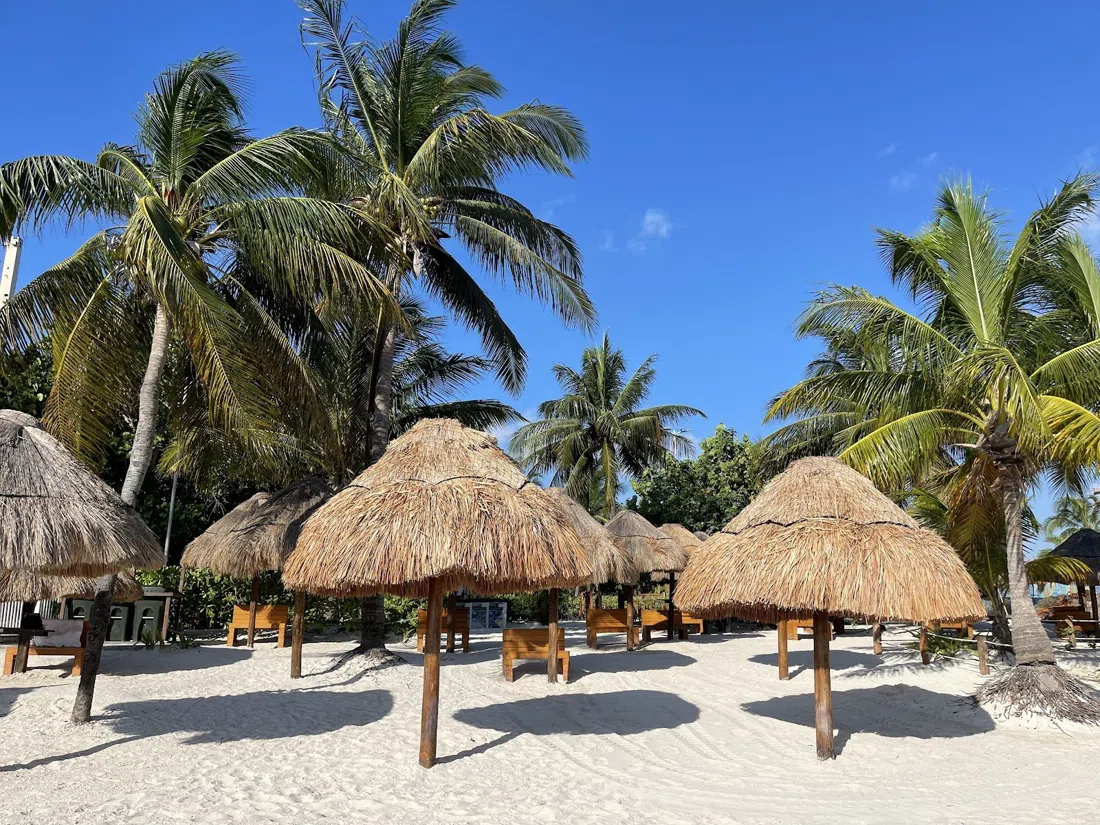
Playa Langosta (Km 5) is the one to write down if you are travelling with small children in the middle of the season. The water is waist-deep a long way out and the calmest in the city, the beach is north-facing and sheltered, and it stays swimmable on weeks when the east coast is windrowed. Free restrooms, free parking, no restrictions on groups. Multi-family parties with toddlers default here for good reason.
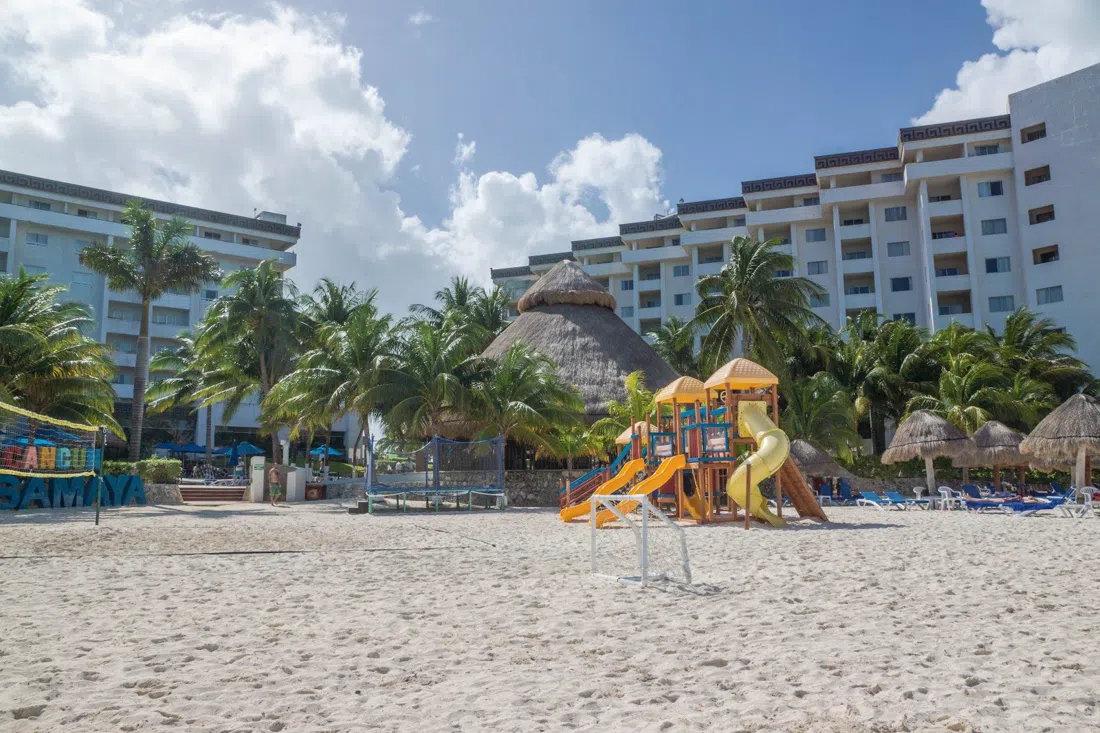
Playa Tortugas (Km 6.5) is the practical hub of the north stretch and the busiest beach on this arm. You get straight off the boulevard onto the sand, and there are beach restaurants, water-sports operators and a pier all on the same few hundred metres. Boat trips and water sports run roughly US$40 to US$80 per person depending on what you climb onto. Crossings to Isla Mujeres leave from here too, at a higher fare than the mainland terminal. On a week when the Caribbean side is unusable, this is the beach where you can swim, eat and get on a boat without moving the car.
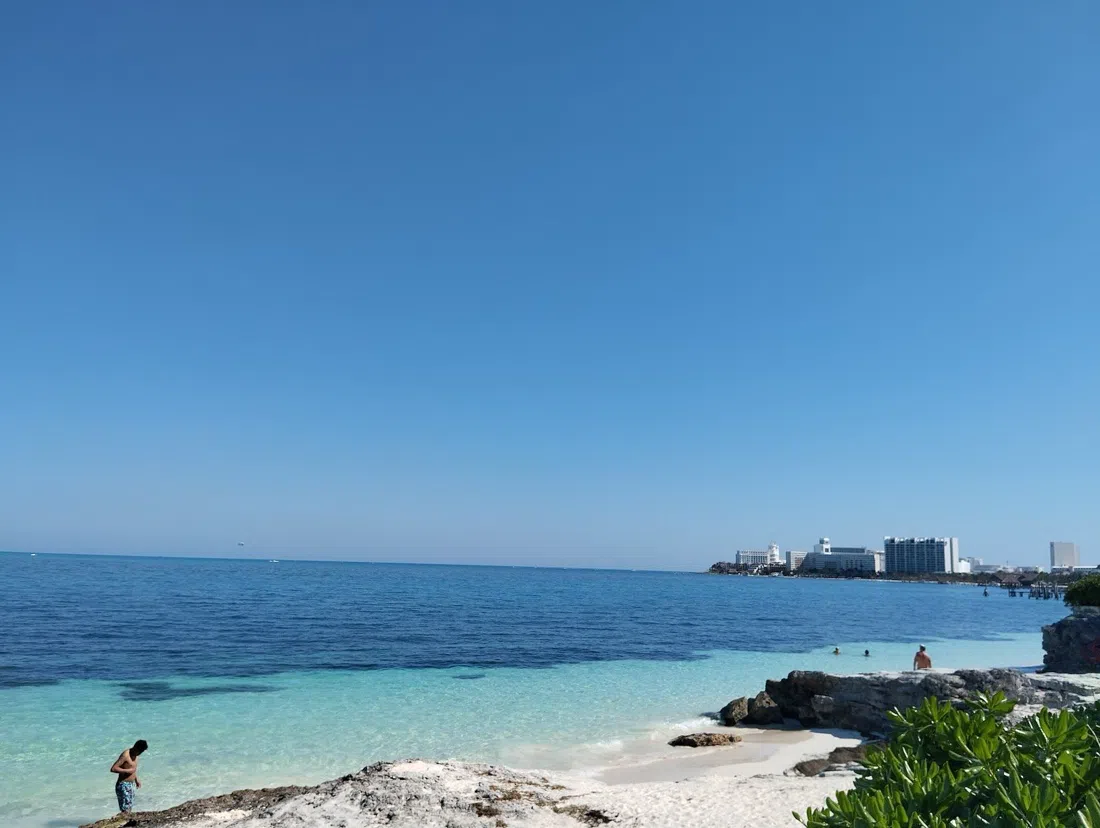
Playa Caracol (Km 8.5) is the last beach before the coastline pivots, the hinge itself. Access is free but the sand is pinched between hotel frontages and gets tight quickly, so groups work only if they spread out. Its real function in a sargassum week is as a departure point: most snorkel and catamaran boats pick up here, so it tends to be where you end up on the day you decide to stop fighting the beach and get offshore instead.
Walking the east coast before you write it off
Playa Chac Mool (Km 10) is the first beach after the bend and the honest place to see the change with your own eyes. Walk ten minutes south from Punta Cancún in July and the water goes from glass to surf, and the brown line appears. It is a good beach on a clean day: free, with restrooms, and far more room for a group than anything in the north. But waves and rip currents make it a poor choice for weak swimmers regardless of the weed.
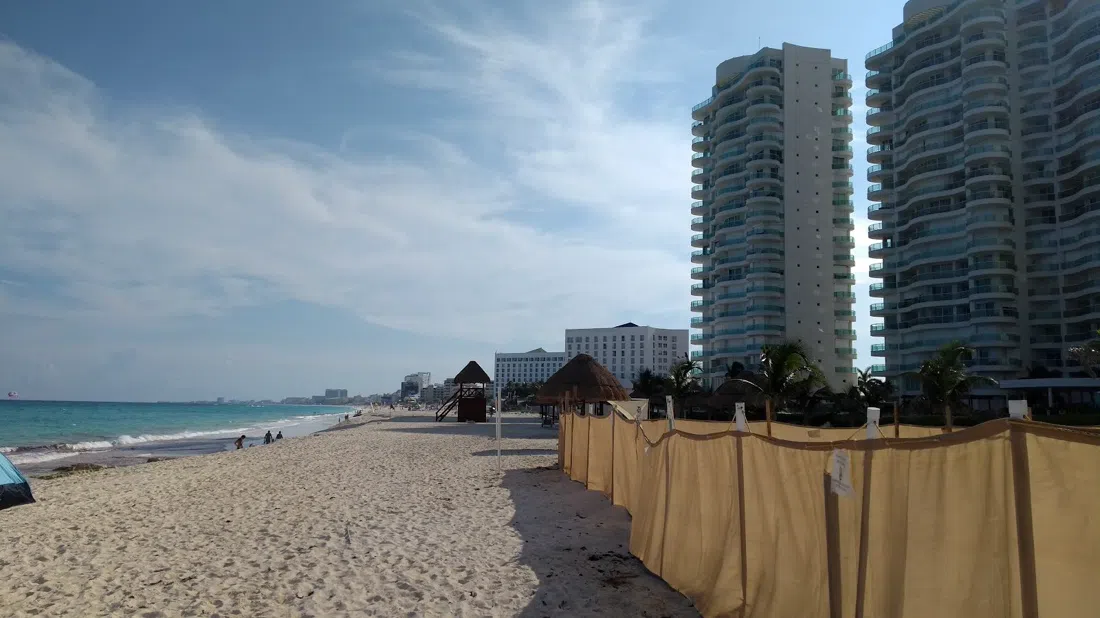
Playa Marlín (Km 12.5, behind the mall) has the most beautiful sand in Cancun on a clear day and is one of the most exposed on a bad one. It is also the widest beach in the Hotel Zone, which means large groups fit here in a way they do not up north. Do not write off the east coast wholesale: ZOFEMAT and Navy crews clear the Km 10 to Km 20 stretch daily, working from first light, and a beach that looked hopeless at 7am is often presentable by 10 or 11. A morning check costs you a bus ride.
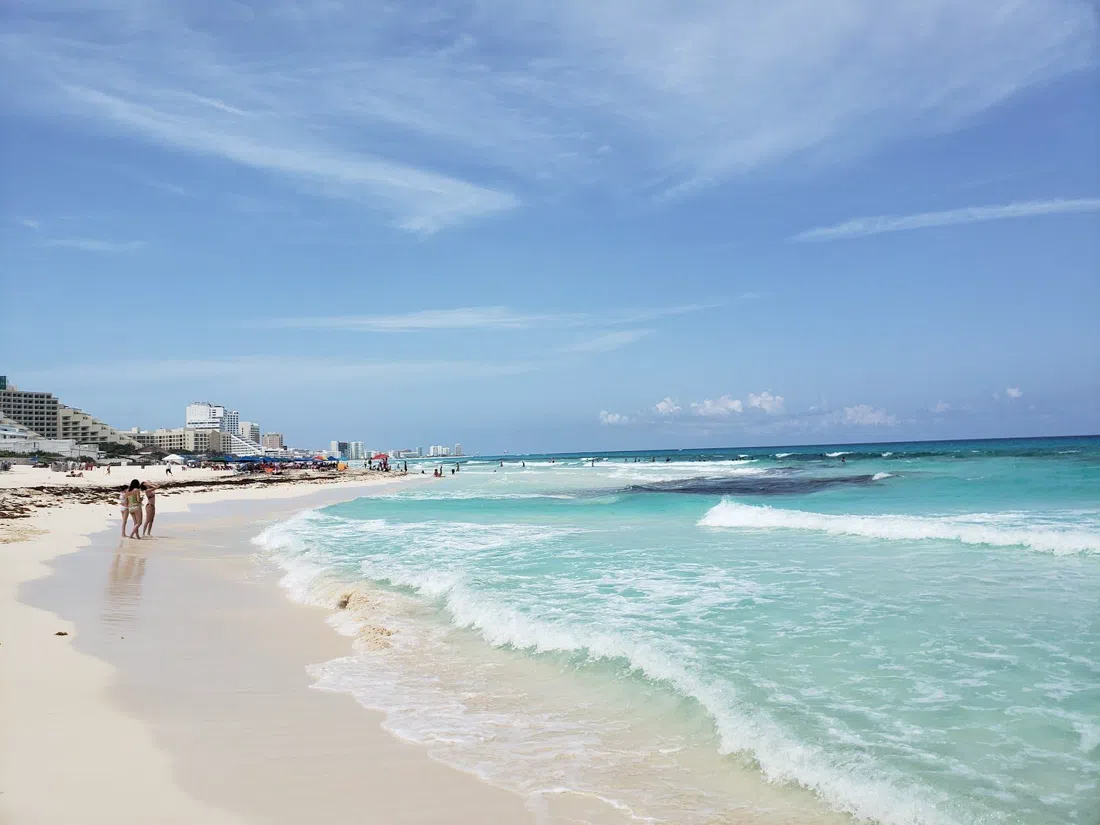
Playa Delfines, known to everyone as El Mirador (Km 18), is the city's biggest free beach and its best vantage point for actually reading the sea. From the viewing deck you can see the rafts sitting offshore before they land, which tells you what tomorrow looks like as well as today. Free parking, no hotel frontage, and it handles coach parties and large groups without effort. It also takes the full brunt in peak season, and swimming is frequently red-flagged for currents even when the water is clean. Treat it as a lookout and a photograph, not a default swim.
The twenty-minute crossing that rescues a week
Ultramar (Puerto Juárez, north of downtown) is the escape hatch. Boats leave roughly every thirty minutes from early morning to late evening, there is no booking requirement and no group limit: walk up, buy, board. Fares run about MX$290 (~US$16) one way and MX$580 (~US$32) return. Buy at the desk or online to skip the queue, and ignore the men outside the terminal offering to sell you something better; there is nothing better.
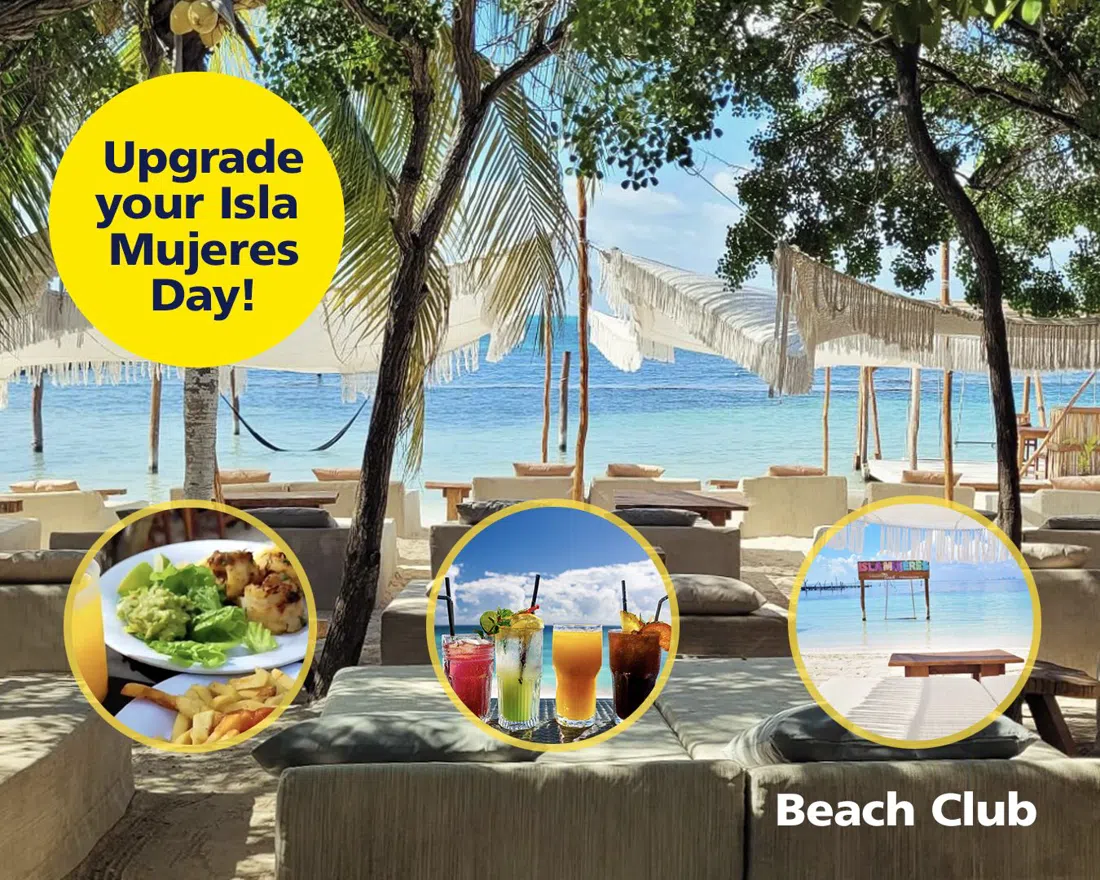
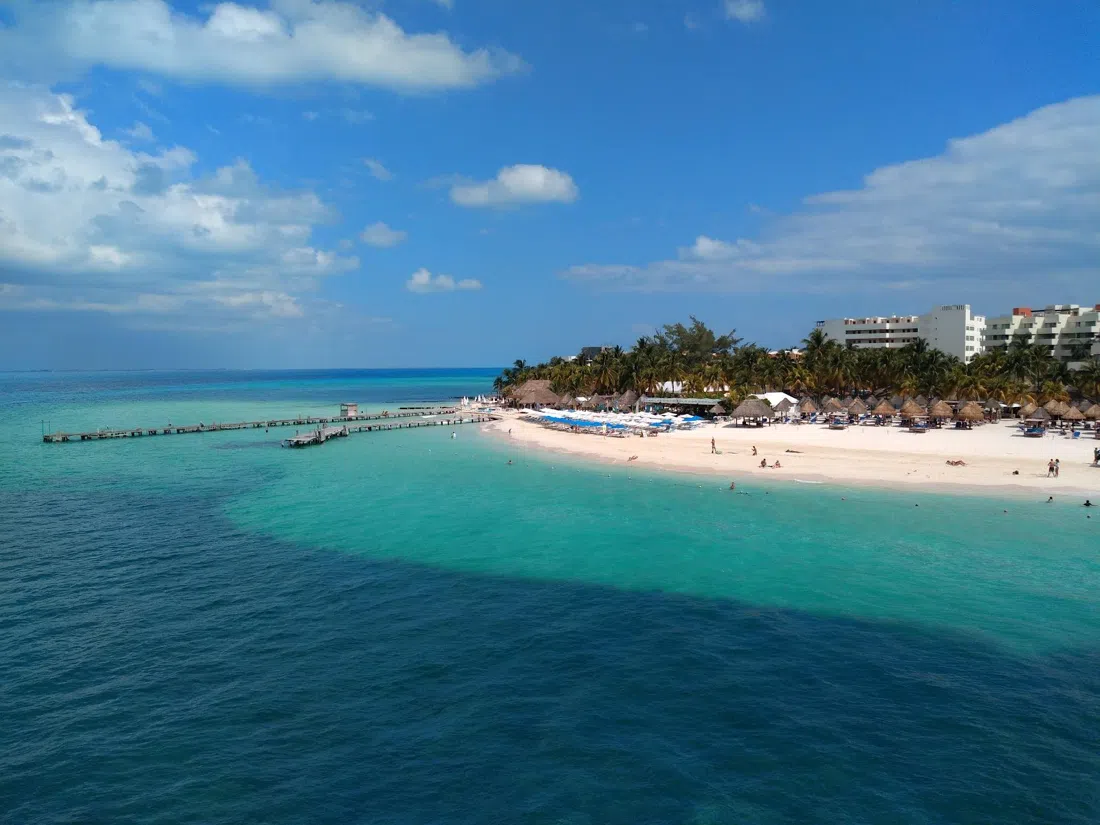
What you are buying is Playa Norte, Isla Mujeres (the island's north tip), the most sargassum-resistant beach in the region. It faces west across the bay while the weed arrives from the east, so even in the heavy 2026 bloom the incursions were short-lived. It is not immune (more than fifty tonnes were cleared in a single event in March 2026), but it clears far faster than anywhere on the mainland. The beach is free; beach-club loungers run roughly US$15 to US$30 per person and the clubs take walk-up groups without fuss. The catch is timing: between 11am and 3pm the day-trip boats land and it gets genuinely packed. Take the first crossings of the morning and you get an hour of it nearly empty.
Getting your face under the surface instead
Sargassum is a surface phenomenon. Below it, the water is usually fine.
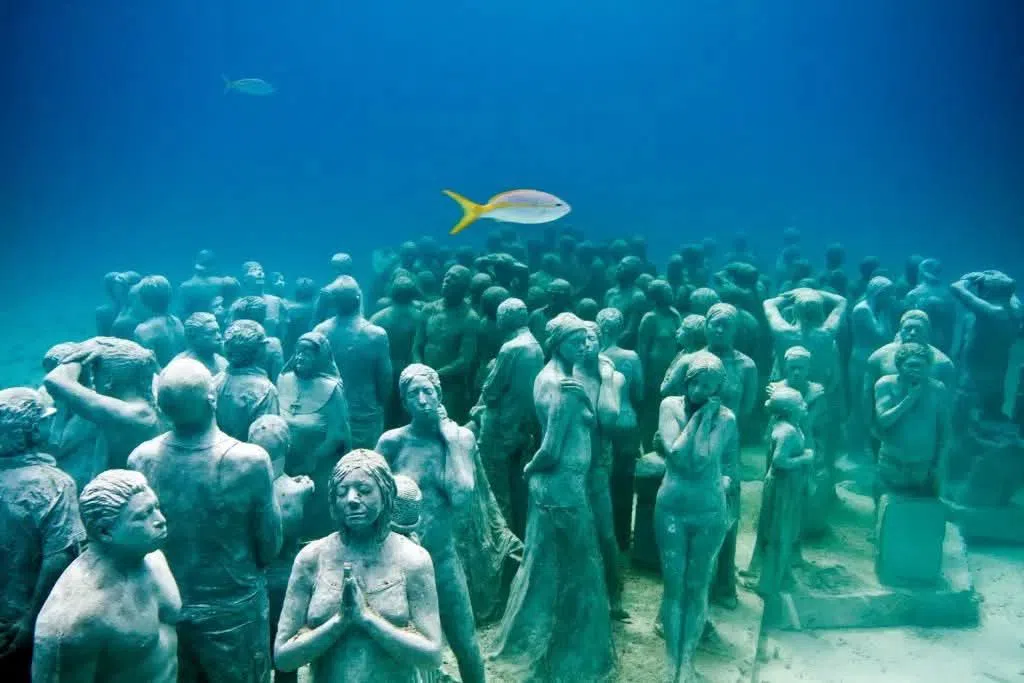
MUSA — Museo Subacuático de Arte (Punta Nizuc, the southern end of the Hotel Zone) proves the point. The Punta Nizuc gallery of submerged sculptures sits in about four metres of water, shallow enough for snorkellers and for children who can swim confidently. Access is by authorised operator only, 9:00 to 17:00 daily, from around US$75 per person for snorkel trips and more for dives. Get your mask in the water over the figures and the mess on the beach becomes irrelevant.
Aquaworld (Boulevard Kukulcán marina) is the standard local answer to a weeded-in morning. Its Jungle Tour runs small boats through the Nichupté lagoon (sheltered water behind the Hotel Zone that sargassum never reaches) and then out to the reef, roughly US$75 to US$110 per person. The marina is built for groups and hotel pickups, check-in is half an hour before departure, and in high season you should book ahead. One entry here covers a whole catalogue of trips leaving from the same dock.
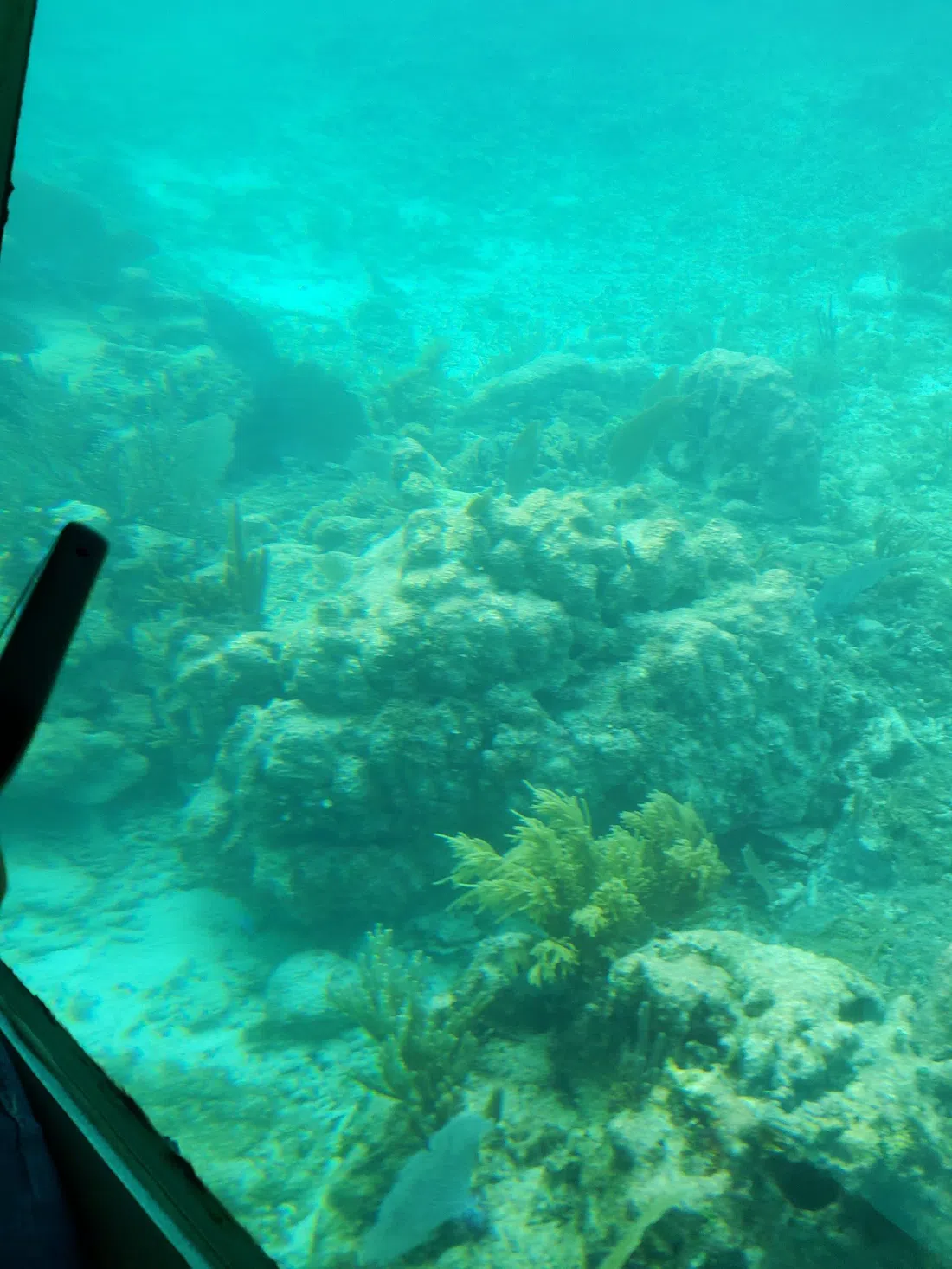
Parque Nacional Arrecife de Puerto Morelos (about 35 minutes south by road) is the better snorkel if you care about the reef rather than the boat ride. The Mesoamerican Barrier Reef runs unusually close inshore here, which breaks the swell and leaves the bay behind it noticeably calmer than the Hotel Zone. Trips are short and easy on weak stomachs, run by the town's cooperative and dive shops all day, and cost roughly US$50 to US$100 per person with park fees normally included. Parrotfish, rays and seasonal hawksbill turtles. Access is by boat only.
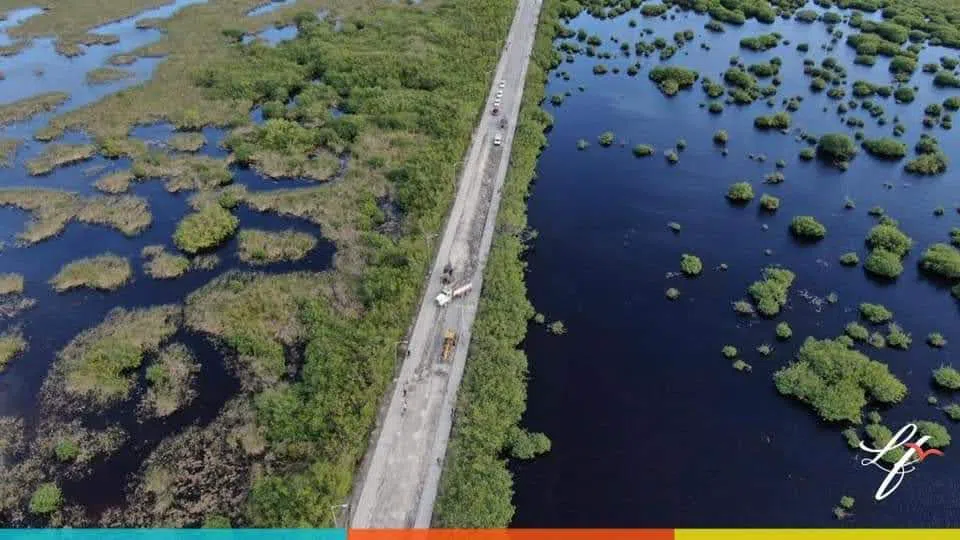
Isla Contoy National Park is the day for people who would rather be in a nature reserve than on a beach. Only 200 visitors a day are allowed across all boats and you can only go with an authorised operator, so groups need to book well ahead. Trips do not run daily and summer storms cancel departures outright. Expect from around US$155 per person plus the MX$225 park entry fee, which is often not included. The boat spends the day north of the weed's main line of attack, with biologist-led walks and a snorkel stop on Ixlache reef. It is one of the few paid excursions that reliably delivers clear water in August.
Wind, lagoon and fresh water
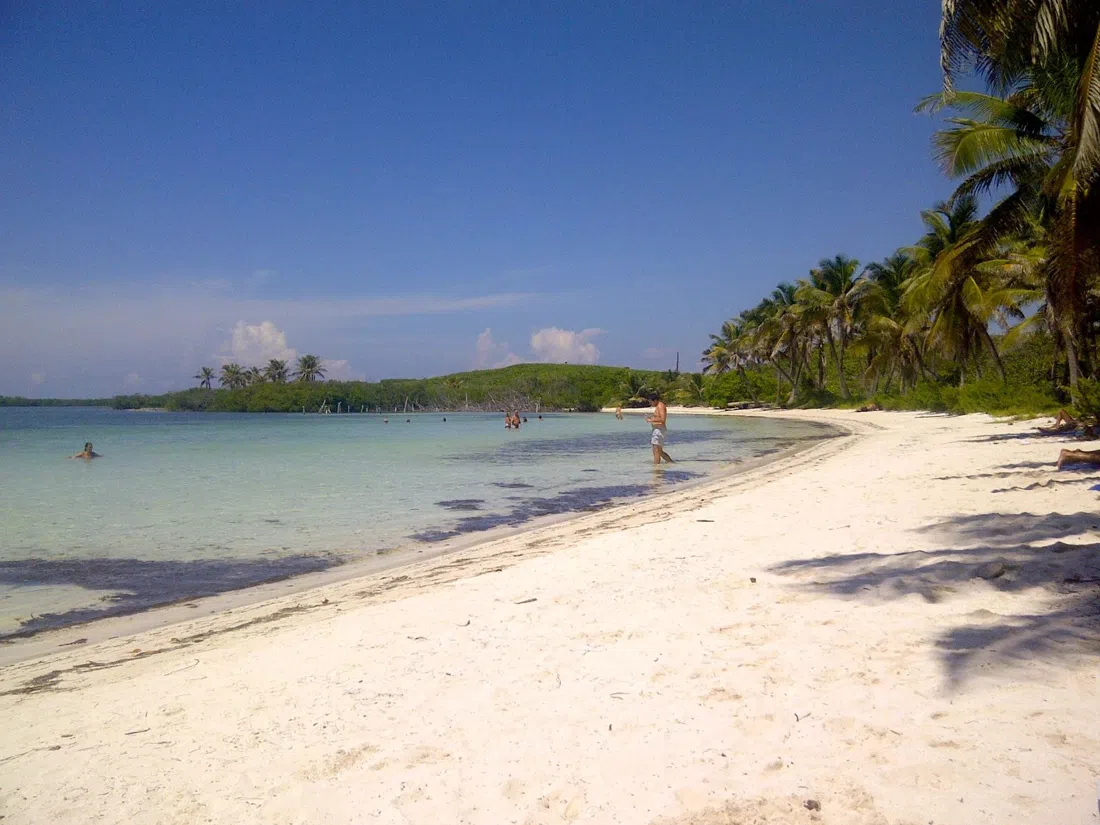
Isla Blanca and Laguna Chacmuchuc (25 to 40 minutes north of the Hotel Zone) is sargassum-proof by definition on the lagoon side, because a sheltered brackish lagoon is not the Caribbean. The beach is free and open, and the kite schools out on the spit are IKO-certified and take groups for lessons and rentals; book ahead in the windy months. Lessons run roughly US$90 to US$150 a session with gear extra. Bring your own food and water, because there is almost nothing out there, which is half the appeal.
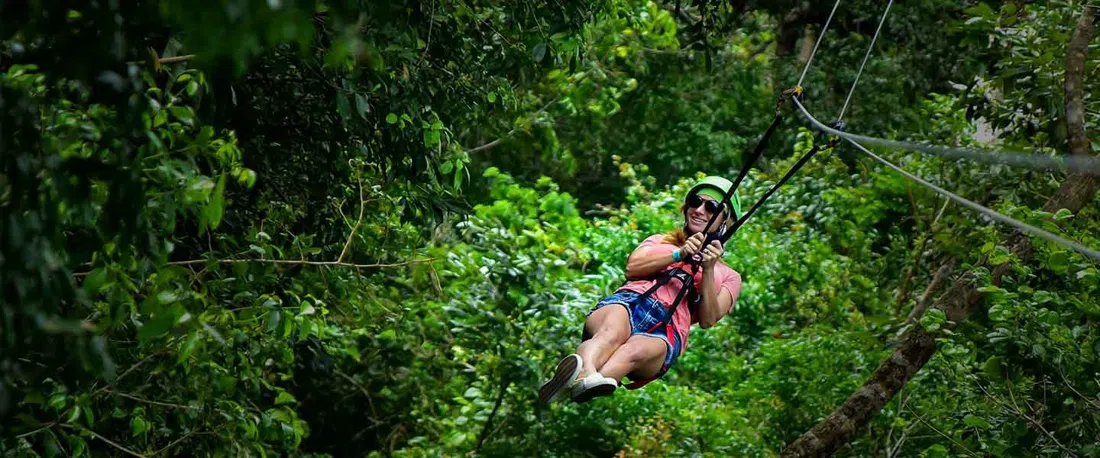
Cenotes Zapote Eco Park (on the Ruta de los Cenotes, about 50 minutes from the airport) is the strongest full-day inland swap. Four cenotes on one site, plus zip lines and bikes, open daily 9:00 to 20:00, with lockers, showers, parking and a regional-food restaurant that makes it workable for a group. Around US$35 to swim, or roughly US$99 for the all-inclusive package. The Hell's Bells formations are certified-divers-only, so do not turn up expecting to snorkel them. Freshwater, inland and entirely indifferent to what the sea is doing. The Ruta de los Cenotes as a whole is the locals' standard plan B.
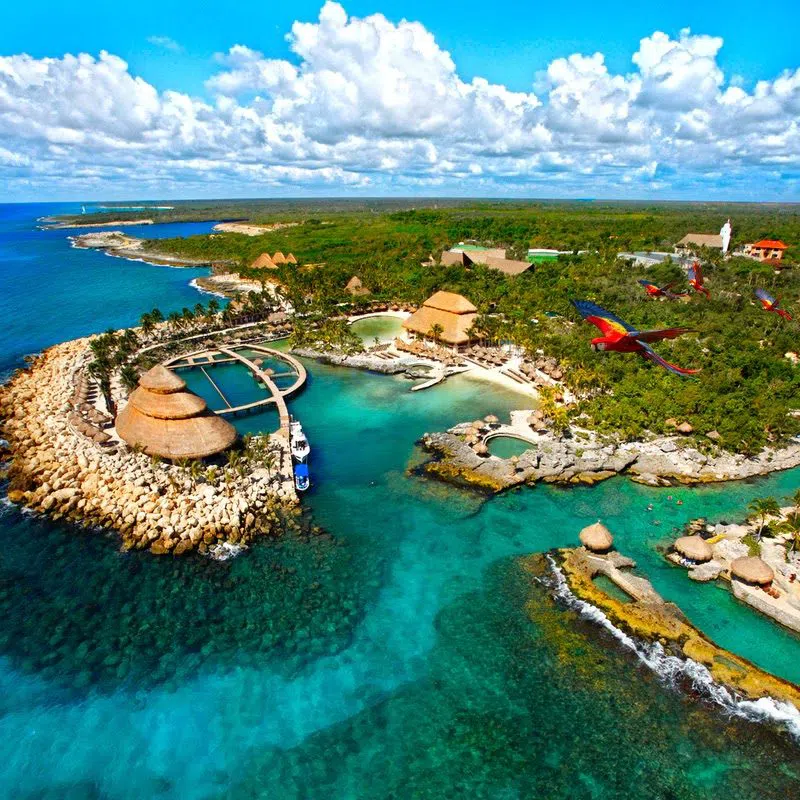
Xcaret (about an hour south on the highway) is the biggest sargassum-proof swimming day available, because its water attractions are underground rivers and a sheltered inlet rather than exposed coast. Open daily 08:30 to 22:30, priced from roughly US$110 to US$160 per person depending on whether you take the basic ticket, the version with the buffet, or the one with the evening show. It is a genuine mass-capacity operation built for coaches and large groups, which is the honest caveat too: busy, commercial and priced accordingly. Buy online in advance for the discount and to guarantee entry on peak days.
Practical notes for a summer week
Buses. The R1 and R2 run the length of Boulevard Kukulcán between downtown and the southern end of the Hotel Zone, all day and most of the night, for a flat fare of about MX$12 paid in cash to the driver. They stop wherever you flag them, which makes beach-hopping trivially cheap. Checking three beaches before breakfast costs less than a coffee. For the ferry terminal at Puerto Juárez, take a downtown-bound bus or a taxi; taxis have no meters, so agree the fare before you get in.
Cash. Carry pesos. Buses, beach vendors and small operators are cash-only, and while tours are commonly quoted in US dollars you will usually pay less by settling in pesos. Withdraw from bank ATMs rather than the freestanding machines in tourist corridors, and decline the offer to be charged in your own currency.
Timing the day. Cleaning crews work from first light, so the east coast looks its worst at 6am and its best around 10 or 11. Boats leave early because the wind builds through the afternoon and summer storms stack up after about 2pm, so a morning departure often decides whether the trip runs at all. In peak season, check the beach before you commit the day, from the El Mirador deck if you want to see the offshore rafts yourself.
Budget. Every beach in this piece is free to walk onto. The paid days are what a bad week actually costs: figure MX$580 for the ferry, US$50 to US$100 for a reef snorkel, US$75-plus for the sculptures, and US$110 to US$160 for the big park south of town. Budget roughly one paid water day for every two beach days in July and August and you will not be caught out. The rest of the city (where to eat, what else is worth the bus fare) is in the Cancun guide.
And ignore the promises. No operator can guarantee a sargassum-free beach, no webcam photograph is more than a few hours of truth, and anyone selling certainty about the sea in August is selling you something else. The coast changes daily, and if you plan for that it is still one of the easiest places in the world to get into warm water.