Cancun 특집호
Swimming Cenotes and Snorkeling With Turtles From Cancun
What a half-day of cenote swimming and turtle snorkeling out of Cancun costs at the gate, and the hour you need to be in the water.
글: Maja LindqvistThe city past the hotel zone
Green turtles graze the seagrass in Akumal bay in 2 to 4 m of water, and the clearest hour is the first one after the beach gate opens. By mid-morning other people's fins have stirred the silt and visibility drops. Cenote Dos Ojos holds its temperature and its visibility across the whole year.
What a cenote and turtle half-day involves
The trip has three parts: a freshwater swim in a cenote, a snorkel over the seagrass where the turtles feed, and lunch on the sand. Each part is a separate place with its own gate and its own ticket. You can assemble it yourself or buy it packaged with a transfer.
The turtle part happens at Akumal Bay Turtle Snorkel Zone (Bahía de Akumal), a shallow crescent of white sand and clear turquoise water with dark seagrass patches showing through it. An orange buoy line marks the turtle zone. You float the circuit inside that line in a bright life vest, in a cluster of other snorkelers, with low palms and palapa roofs along the shore behind you. The animals are green turtles feeding on the grass, in water shallow enough that you can follow every movement from the surface.
Guides work the buoyed circuit in pods of six snorkelers, and coach parties get split and staggered across the morning. A guided circuit with a vest runs 200 to 350 MXN. The beach gate charges bay and environmental access separately.
Cancun 여행 계획하기
예약 파트너의 실시간 가격입니다.
많은 객실이 무료 취소 가능합니다. 예약 시 당사가 수수료를 받을 수 있습니다.
Who puts you in the water at Akumal
Centro Ecológico Akumal (Akumal) is the bay's research centre and has no commercial stake in it. The low white-and-turquoise building sits behind the beach under hand-painted turtle murals, with outdoor interpretation panels on seagrass and nesting, staff at a shaded kiosk and sea-turtle shell casts on display. Walking up is free, and a donation box takes what you want to give. The centre runs the nesting monitoring and certifies the bay's guides. It neither sells nor runs snorkel tours, and its own site corrects the sales line that a guide and a vest are legally compulsory for independent snorkelers. Talks and programmes happen by arrangement.
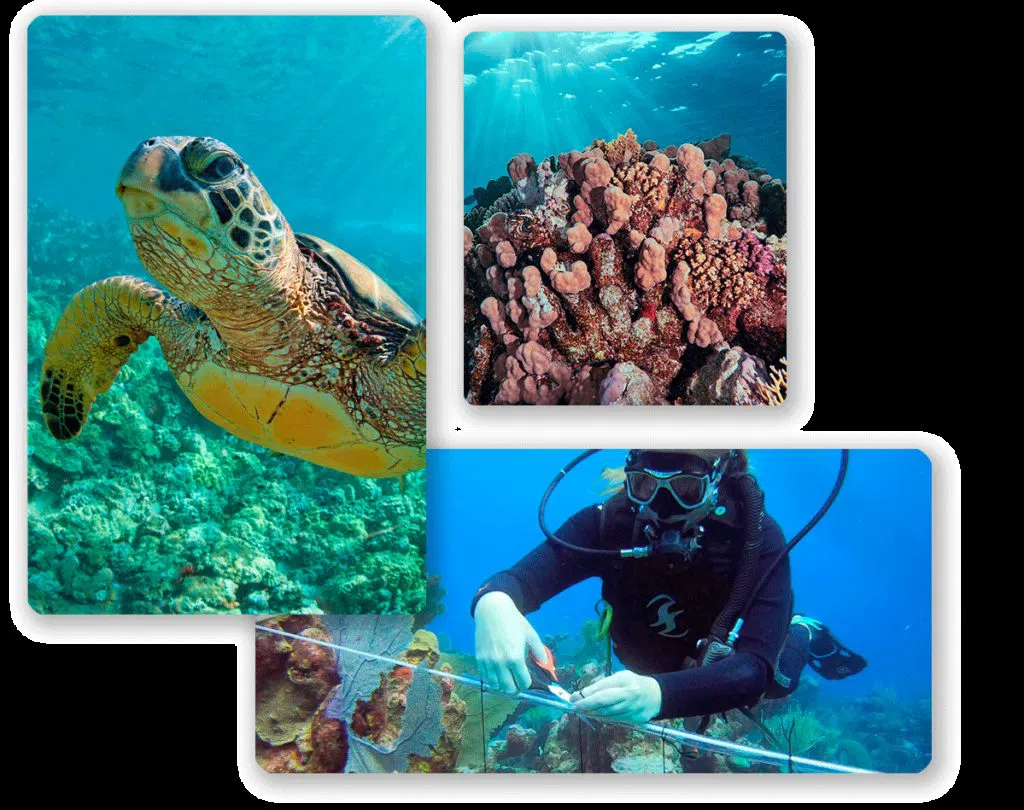
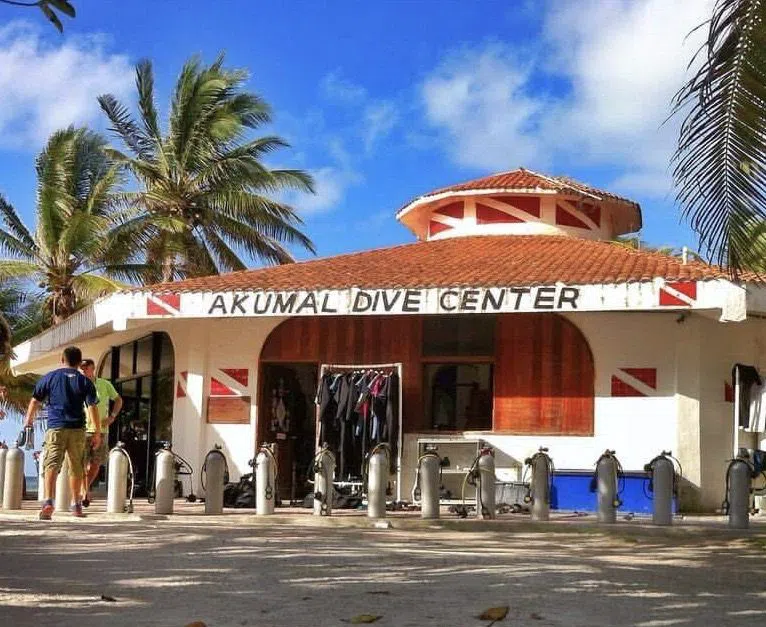
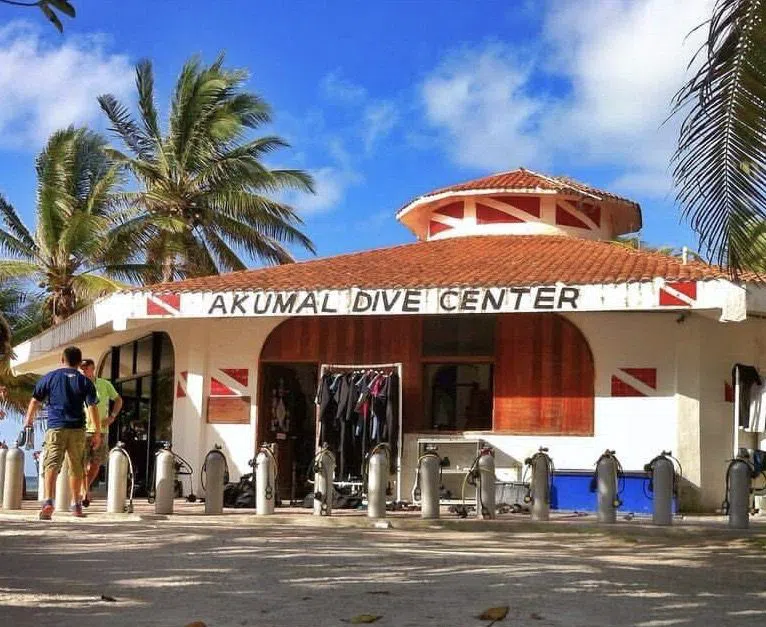
Akumal Dive Shop (Akumal main bay) works out of a weathered palapa-roofed shack on the sand, with wetsuits and fins hanging on racks, scuba tanks lined against a wall and boats pulled up a few metres away. The PADI 5 Star operation runs scheduled bay snorkel departures of 45 minutes in the water, at 700 to 1,500 MXN per person with gear, lockers and showers, and it splits larger parties across guides. Booking in the bay skips the transfer and the packaged lunch, and the guide who takes you out is certified. Anyone on the highway claiming to represent the conservation centre is selling something the centre does not sell.

Cenotes you can swim the same day

Cenote Dos Ojos (Parque Dos Ojos) is two linked sinkhole pools in jungle, reached by a wooden staircase down to a rock platform. The black water surface flips to electric blue where daylight lands on it, stalactites hang low over the swim-through and bats roost in the cavern roof. Snorkelling and swimming cost 350 to 400 MXN, with 300 MXN more to carry an action camera in. The park has parking, lockers and vests. Cave sections are guide-only and run in small groups. It opens 8 a.m. to 5 p.m., with last entry in the middle of the afternoon.
Casa Cenote (Cenote Manatí) surfaces as a winding freshwater channel through mangroves, with dense green banks on both sides and a wooden deck and steps into the water. You can see the halocline blur where fresh water meets salt. The channel runs out to the Caribbean a couple of hundred metres downstream. Entry is 150 to 200 MXN including a life jacket. A habituated Morelet's crocodile called Panchito has lived here since 2013, and the guides keep swimmers clear of him.


Cenote Jardín del Edén (Ponderosa) is a wide open limestone swimming hole with a high rock ledge for jumping and sunbeams cutting down through deep clear water. Lily pads and tree roots line one rim, and turtles and small fish hold in the shallows. Adult entry is 200 to 300 MXN, less for children. A vest costs 50 MXN and snorkel gear 25 MXN on site. The pool has room for a party to spread out.
Cenote Azul is a chain of shallow terraced pools over pale limestone, with a cliff ledge and a jumping platform at one end and jungle pressing in on all sides. Shoals of tiny fish nibble at your ankles in the blue-green shallows. Adult entry is 180 MXN, 120 MXN for ages 4 to 7 and free under 4. The water is shallow enough for small children. It opens 8:30 a.m.
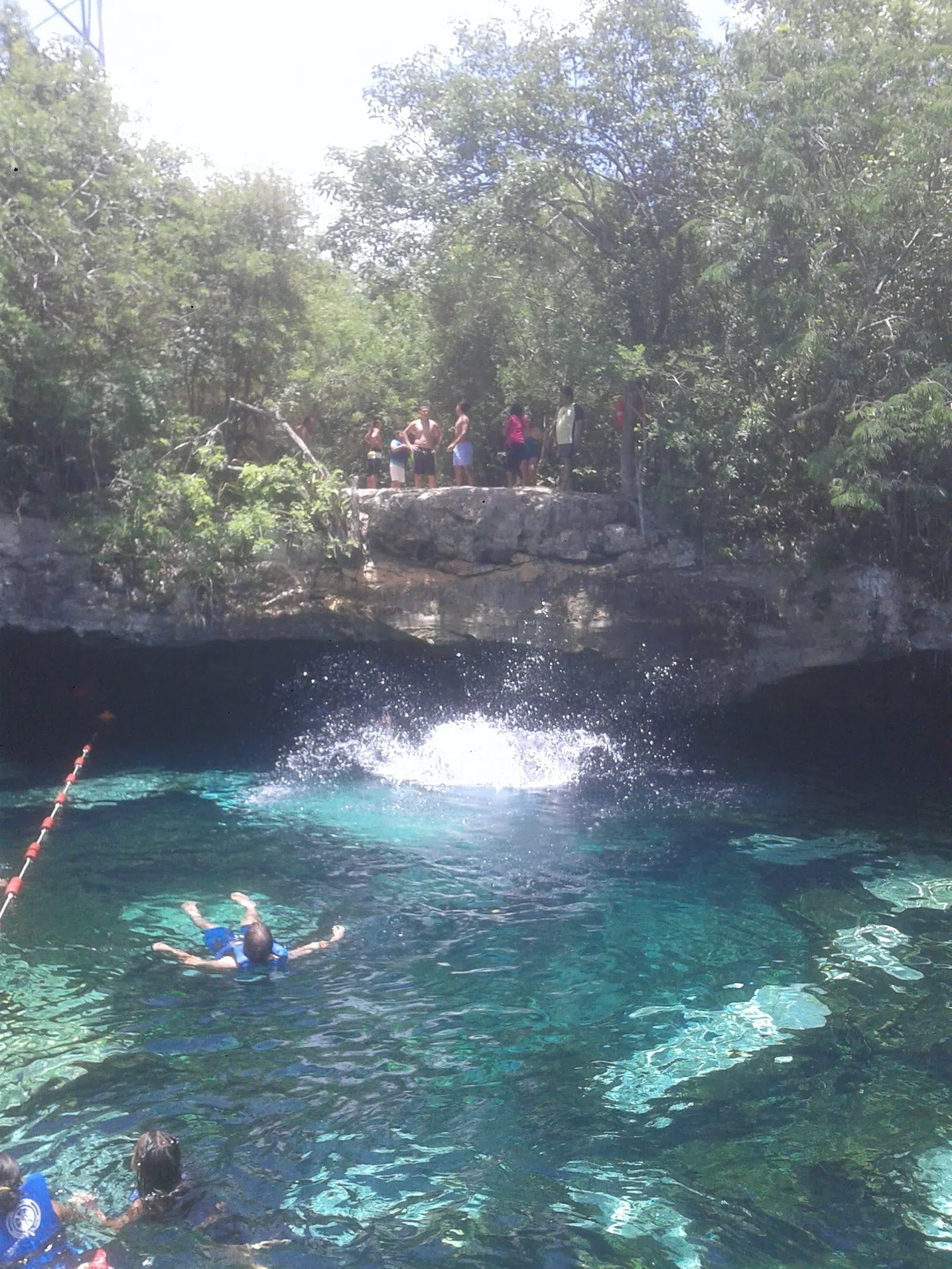
Chikin Ha Cenote Park holds three linked cenotes (an open pool, a cavern and a dark chamber), with zip-line cables overhead and timber decks and stairways between them. Basic entry to all three with a vest is 350 MXN, and the package with ziplining, bikes, snorkel gear and a Mayan ceremony is 650 MXN. The park bans sunscreen, creams and repellent, and the outdoor shower stalls at the entrance are compulsory before you get in the water. It opens 8 a.m. and absorbs a coachload without feeling crushed.

Breakfast and lunch on Akumal sand

Turtle Bay Café & Bakery (Plaza Ukana, Akumal pueblo) opens at 7 a.m., early enough to eat and still reach the buoys when the bay opens rather than after the first wave of vans. The courtyard is small and shaded, with bright painted walls, a pastry counter of sticky buns under glass, ceiling fans, potted plants and bicycles leaning outside. Breakfast, pastries and coffee come to 120 to 300 MXN. The rush runs 7 a.m. to noon and the courtyard is compact, so a dozen of you should expect a wait.
Lol-Ha (Akumal main bay) is the large open palapa on the sand, a long thatched roof on timber posts over white plastic chairs and wooden tables facing the water. It opens early for breakfast and stands right where the snorkel ends, which is also why it is busiest at the moment every morning circuit comes out of the water. Food runs 250 to 600 MXN a head, and the snack bar and pizzeria side is cheaper. It has the biggest sit-down capacity on the main bay, and snorkelers dry off at the edge of the terrace.
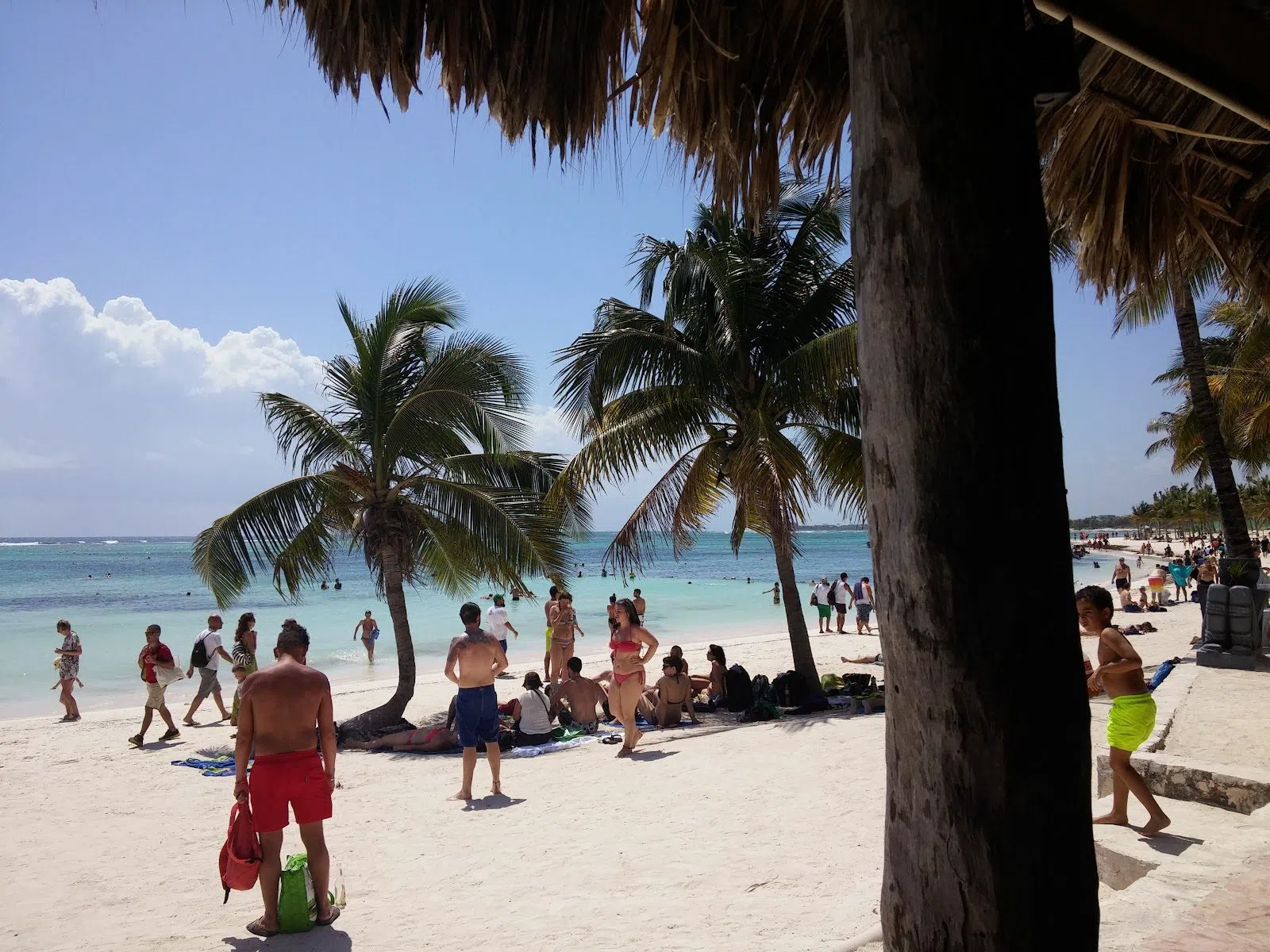
La Buena Vida (Half Moon Bay) has a sand floor, swings in place of bar stools, a treehouse-style upper deck on stilts and hammocks strung between the posts. Tacos, bowls or burgers with a drink come to 250 to 600 MXN a head. Parties sit under the beach palapas, and children are welcome. It trades Monday to Saturday from morning until late. It is easy to end up rating the afternoon here above the snorkel that preceded it.

Calmer water when wind or sargassum shuts the bay
Yal-Kú Lagoon (Laguna Yal-Kú) is a narrow rocky inlet where fresh water meets the sea, with jagged black limestone edges, jade-green water carrying a hazy halocline shimmer, stone sculptures dotted along the shoreline path and a mangrove and palm fringe. The brackish water is shallow to 4 m and calm enough for a nervous swimmer. Two gates sit under different management and charge differently, so agree the entrance before you arrive. The original blue-sign gate is 300 MXN and the second gate runs higher.

Half Moon Bay (Bahía Media Luna) is 700 m north of the turtle zone. The seabed is rocky and coral close in, the water is calmer than the main bay, and the swim-out reef shows as dark patches under pale turquoise with low-rise condos and palms at the sand line. Access is free and unregulated, mostly through the restaurant frontage, and you pay only for food, drinks or gear hire. Turtles are fewer here and the coral and reef fish are better. The frontage suits a small party.
Nesting beach and a wet-weather swap

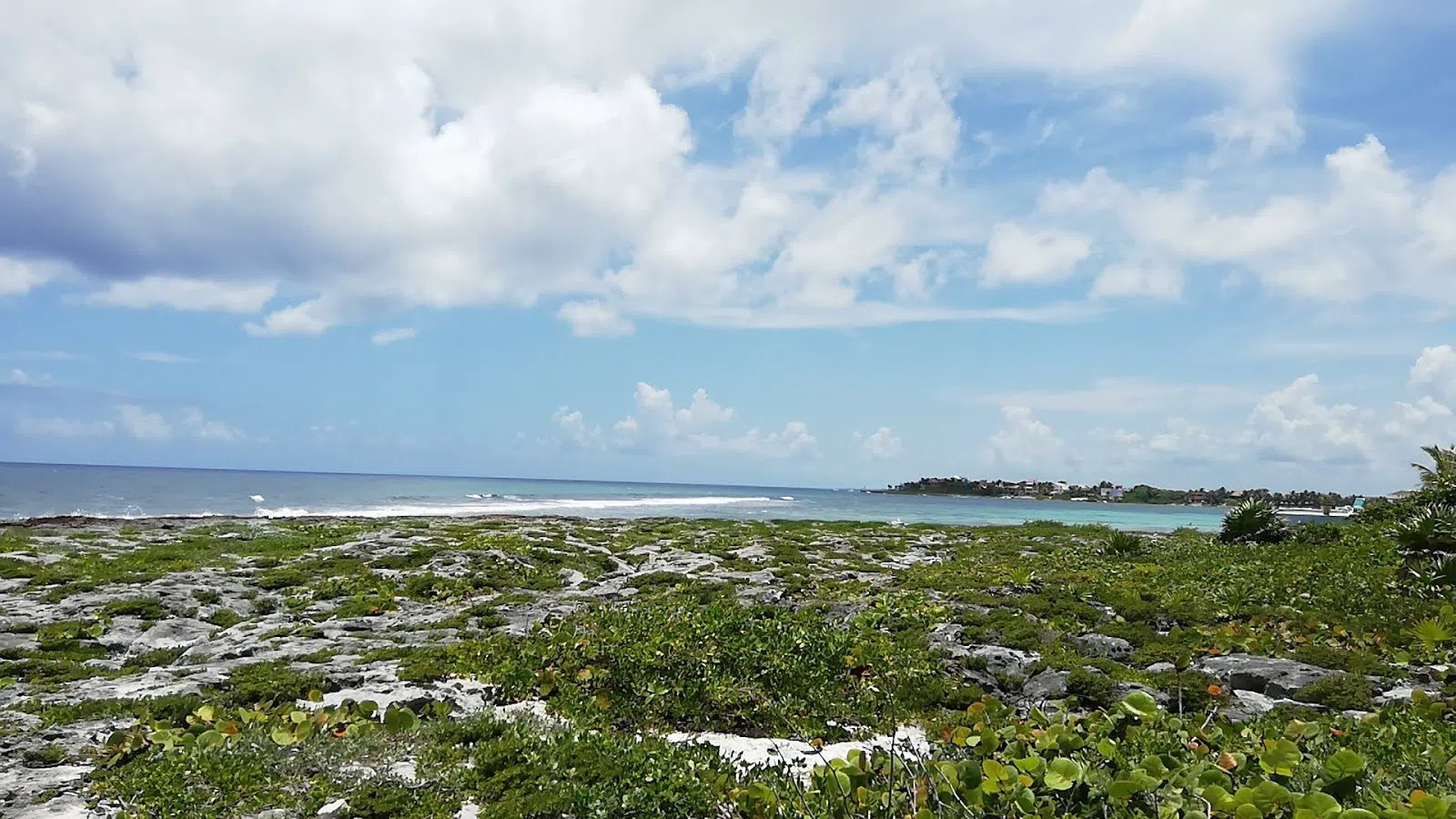
Xcacel-Xcacelito Sea Turtle Sanctuary is 362 hectares of protected coast where the turtles nest instead of feed. The bay is undeveloped white sand backed by raw jungle with no hotels in sight, roped-off nesting plots on the dunes and a wooden boardwalk through low scrub. Foreign visitors pay 97 to 114 MXN, with lower rates for Mexican nationals and Quintana Roo residents. A small freshwater cenote sits inland from the beach and takes six people at a time. A large party waits on the sand. It opens 10 a.m. to 4 p.m.
Akumal Monkey Sanctuary & Rescued Animals is five minutes from the bay and houses 200 rescued animals. Guided tours run 9 a.m. to 5 p.m. on set timings, along jungle walkways under dense canopy with spider monkeys and capuchins moving through the trees above you, past large open enclosures, starting from a shaded palapa briefing area. Adults pay 1,400 MXN and ages 5 to 11 pay 1,000 MXN. VIP and ATV options run considerably higher, and children must be five or older. The price sits well above a cenote ticket, so give it the whole afternoon if you go.

Tickets at the gate or booked ahead
Cenote entry and the Akumal circuit are both paid at the gate on the day, and the gate prices are the ones above. A packaged half-day with a transfer and a lunch is a separate purchase, and those guided departures run seven days a week. Some departures are already fully booked on 8, 15, 22 and 29 November 2026 and on 6 and 13 December 2026, plus 26 further dates; other dates are still bookable. Book ahead when your day is fixed.
Best time to go
Be at the beach gate for opening if the turtles are the reason you came. Jardín del Edén closes every Saturday to rest the ecosystem, which writes it out of a weekend plan. Xcacel closes on Mondays. Cenote Azul's car park and pools fill quickly at weekends and on Mexican holidays, so make it a weekday morning.
Is it worth it
It suits a swimmer who wants fresh water and salt water in the same morning and will get up for the opening gate. You pay a separate charge at every gate, and the turtle swim is the shortest part of the day.
Before you go
Carry pesos: Casa Cenote, Cenote Azul and Xcacel take cash, Jardín del Edén wants cash for vests and gear, Chikin Ha prefers it, and Cenote Azul has no ATM on site. See the Cancun guide and the Cancun hotel search.
떠나기 전에
Do you need a guide and a life vest to snorkel with the turtles at Akumal?
Centro Ecológico Akumal runs the nesting monitoring and certifies the bay's guides, and it rejects the common sales line that the law requires independent snorkelers to take a guide and a vest. A guided circuit with a vest is still the simplest way in, and the beach gate charges bay and environmental access separately.
What time of day should you be in the water at Akumal bay?
The first hour after the beach gate opens. Green turtles graze the seagrass in 2 to 4 m of water, and once a few pods of snorkelers have been through, fins stir up the silt and visibility drops. Turtle Bay Café & Bakery in Akumal pueblo opens at 7 a.m. if you want breakfast first.
Can you just turn up, or do you need to book ahead?
You pay cenote entry and the bay circuit at the gate on the day. A packaged half-day with a transfer runs seven days a week, and some departures are already full on 8, 15, 22 and 29 November 2026, on 6 and 13 December 2026 and on 26 further dates, so book ahead if your date is fixed.
Which cenote works with small children?
Cenote Azul is a chain of terraced pools shallow enough for small children. Entry is 180 MXN for adults, 120 MXN for ages 4 to 7 and free under 4, cash only. Cenote Jardín del Edén has more room to spread out and hires vests and snorkel gear on site. Akumal Monkey Sanctuary takes children from age five.
Is the crocodile at Casa Cenote a problem for swimmers?
A habituated Morelet's crocodile called Panchito has lived in the mangrove channel since 2013, and the guides keep swimmers clear of him, which makes the channel awkward for very large parties. Entry is 150 to 200 MXN including a life jacket, cash only.